




Article

Article

The trade in counterfeit goods, especially luxury goods, is big business. According to OECD estimates, 467 billion US dollars in counterfeit goods were traded in 2021, a significant proportion of which were luxury goods. This figure is likely to have risen since then. Handbags (especially Chanel, Gucci, and Louis Vuitton), luxury watches (especially Omega, Patek Philippe, and Rolex), and Alexander McQueen shoes are particularly affected. Over 90 million counterfeit products are said to have been removed from the Chinese online trading platform Alibaba alone in the last two years.
There are many reasons for this booming market: the originals are very expensive and coveted as status symbols. At the same time, Generation Z is more accepting of counterfeits than previous generations, as they are affordable, easily obtainable online, and confer prestige on social media. In addition, there are more and more so-called "superfakes", i.e. high-quality copies that are almost indistinguishable from the originals.
On social media, accounts with a wide reach are fuelling this trend by promoting online shops that sell "high-quality replicas". With their large followings, they are substantially contributing to the spread of counterfeit-branded goods, as a recent investigation by SRF demonstrated.
But what few people think about when they buy a fake Gucci handbag at a night market in Bangkok, from a street vendor in Florence or online is that counterfeit luxury goods harm the manufacturing companies and thus jeopardise jobs. They weaken brand value and customer trust and infringe intellectual property rights. In addition, counterfeits are often manufactured in violation of ESG principles. Finally, there are legal consequences if you knowingly and willingly purchase a counterfeit item, e.g. because it is a "bargain".
Put simply, an item is counterfeit if it is not genuine. Genuine or authentic goods are those that are what they claim to be (e.g. they come from the manufacturer named on the product). A counterfeit exists, for example, when a handbag – typically produced in China or Turkey – is labelled “Gucci” even though it does not originate from the Italian manufacturer, is not made of high-quality leather, may have imaginary serial numbers stamped on it, and is sold with fake documentation, which is particularly common with luxury watches. In this case, counterfeiters reproduce an object with the intention of deceiving, which is sold as an original. The law provides a whole range of instruments to combat such business practices, which are damaging to the economy. The manufacture, marketing, sale, and purchase of counterfeit goods face criminal and civil law consequences.
Gucci, Patek Philippe, and Alexander McQueen naturally want counterfeits of their products to disappear from the market and to be compensated for lost profits. The rights that protect manufacturers against counterfeiting vary depending on the type of luxury good. In the case of a luxury watch, the company benefits from the protection of the brand, the design, and the inventions necessary for its production. We are talking about what is known as intellectual property. The owner of the right is protected against any infringement of their legal position. In the case of a handbag or a designer jacket, copyright protection is paramount in addition to trademark and design protection.
This trademark, design, and patent protection gives manufacturers a wide range of rights. Among other things, they are entitled to have the unlawful act remedied. Confiscated counterfeits can be destroyed. In addition, claims for damages can be asserted against counterfeiters and distributors, as well as the right to surrender illegally obtained profits.
In the case of certain luxury goods such as handbags, clothes or shoes, copyright law, familiar from the arts and culture, also plays a role. For example, the cut of a haute couture dress, the design of a handbag or the overall design of a piece of furniture can be protected, as the Federal Court confirmed in the prominent case of Le Corbusier furniture. Authors can, among other things, demand that the manufacture, marketing, and sale of the counterfeit product be stopped. They can also claim damages.
Intellectual property:
Trademark
Design
Patent
Copyright:
Art. 1 f. URG: intellectual creation with individual character
Example: decoratively designed dial
Anyone who imitates a work protected by trademark, design or patent law, such as a Patek Philippe, must expect to be held criminally responsible. Depending on the type of counterfeiting, the manufacture of a counterfeit product constitutes a criminal offence under the general provisions on counterfeiting (Art. 155 StGB), fraud (Art. 146 StGB) or document forgery (Art. 251 StGB). Depending on the offence, the offender may be liable to a fine with or without imprisonment. Under trademark protection legislation, counterfeiters also face five years imprisonment and/or a fine if they produce counterfeits on a commercial basis.
In one of the biggest scandals in the Swiss watch industry in 2008, watchmaker Jean-Pierre Jaquet was sentenced by the Neuchâtel Economic Criminal Court to 4.5 years' imprisonment and CHF 750,000 in damages. He was involved in a far-reaching network of counterfeiting, handling stolen goods and theft, which included counterfeiting Rolex watches. Despite such convictions, it is difficult to catch counterfeiters as they often operate abroad and evade the authorities through convoluted supply chains and anonymous appearances on online platforms.
Buyers who knowingly purchase counterfeit goods may also face legal consequences. In a recent targeted inspection, Swiss customs seized 256 suspected counterfeit brand-name items within a week. According to Art. 61 para. 1 lit. b MSchG, even importing a counterfeit Patek Philippe or Gucci handbag into Switzerland constitutes a violation of trademark law. Anyone who imports a handbag purchased in Bangkok or Florence and is caught by customs faces a fine or imprisonment.
There is good news for unsuspecting buyers. Under certain conditions, they can reclaim their money. The decisive factor is that they did not know that the item was counterfeit and report it immediately as soon as they find out. Alternatively, the purchase contract can also be contested on the grounds of error or deception. Anyone who would not have bought the goods if they had known they were counterfeit or had been deliberately deceived can also get their money back. However, it becomes more difficult if the counterfeit was obvious, or the purchase took place abroad. In such cases, rights often fall by the wayside.
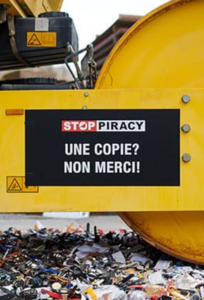
Website
The Swiss platform Stop Piracy provides reliable, fact-based information on counterfeiting and piracy, thereby making an important contribution to raising public awareness. The compact fact sheets are particularly helpful, as they clearly show how to recognise counterfeits and dubious online providers. Anyone who wants to deal with the topic not only theoretically but also practically will find an excellent point of contact here.
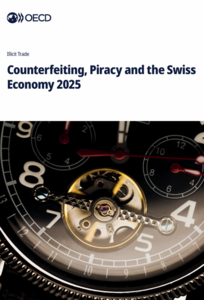
Study
For an additional economic perspective: the OECD study highlights the economic consequences of counterfeiting and piracy in Switzerland. It shows how severely export-oriented industries such as the watch and pharmaceutical industries are affected and provides up-to-date data on trade routes, damage costs and global contexts.