









Crisis of the West

Rethinking the West: Security, Economy, and Geopolitical Realignment
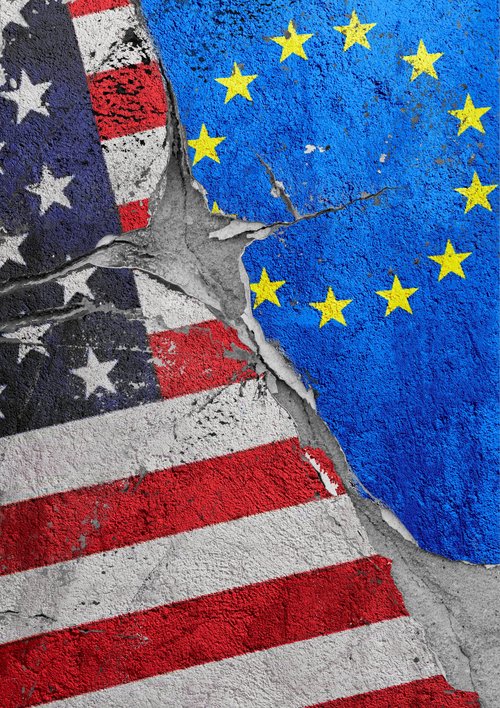
In a world marked by rising instability, the Western alliance is undergoing a profound transformation. From the erosion of Cold War-era nuclear deterrence to ideological shifts in economic policy, both Europe and the United States are navigating a complex new global order.
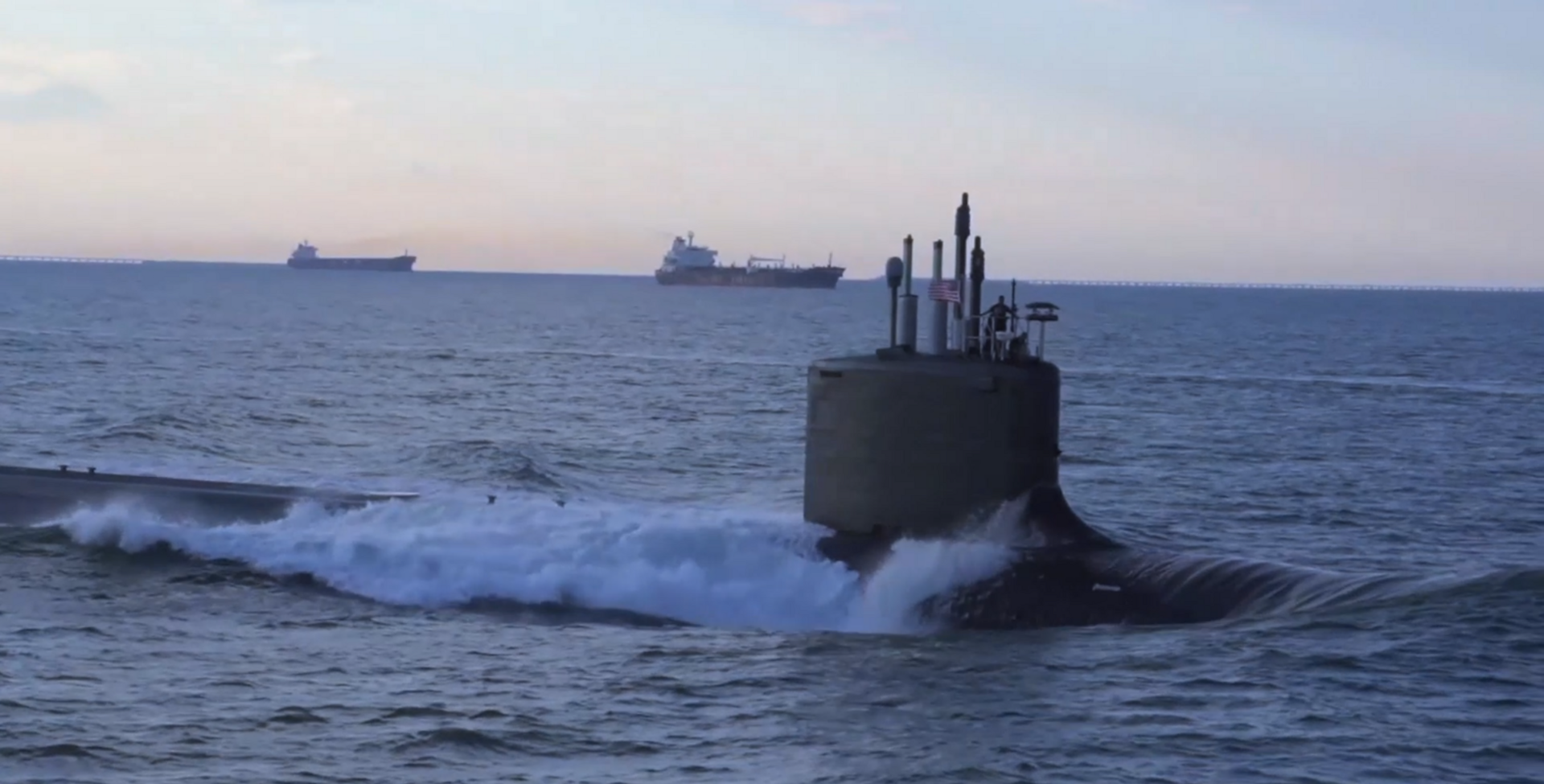
For decades, the U.S. ensured European and Asian security through an extended nuclear deterrent. Today, that strategy is faltering. Russia’s aggressive posturing, China’s military expansion, Iran’s ambitions, and disruptive technologies are all contributing to renewed nuclear insecurity. President Trump’s scepticism toward NATO has revived old fears about U.S. disengagement, forcing Europe to consider autonomous security strategies—developed in cooperation with researchers, policymakers, and civil society.
As Christoph Heusgen notes, the classical Cold War "West" is dissolving. The U.S. is stepping back from its leadership role, while Europe remains anchored to democratic principles and the rule of law. This realignment is paving the way for new alliances—such as an "Alliance of Multilateralism"—with like-minded nations like Canada and Australia.
U.S. conservative thought is also shifting. Oren Cass, founder of American Compass, argues for an economic policy centered on the working citizen — supporting tariffs, re-industrialization, vocational training, and labor unions. His ideas depart from GOP free-market orthodoxy and resemble European social democracy more than Reaganomics.
A fresh analysis of the Trump presidency, grounded in the Elite Quality Index (EQx2025), suggests that institutional change is increasingly driven by intra-elite competition among tech, finance, energy, and education sectors. These elite shifts raise a critical question: are we creating sustainable value, or merely extracting it?
The European Union is also rethinking its role. Facing war in Ukraine, technological dependency, and internal weaknesses, the EU's "Competitiveness Compass" aims to boost investment, reduce bureaucracy, and strengthen supply chains. Yet this strategy risks clashing with traditional EU values such as sustainability, human rights, and free trade.
Finally, Trump’s tariff-focused trade policy has drawn criticism. Economist Martin Wolf argues that tariffs may reduce the trade deficit but harm productivity and investment. A smarter strategy? Channel cheap capital into high-value, tradable sectors—benefiting both the U.S. and the global economy.
As the geopolitical and economic landscape continues to shift, the West must reinvent itself—strategically, institutionally, and ideologically.

Book

Towards an Elite Theory of Economic Development: An Inquiry into Sustainable Value Creation (available in September 2025)

As we described our work on the publisher’s website: Institutions, the humanly devised constraints of economic activity, are outcomes of elite agency. Leveraging ideas from economics, sociology, politics, and strategic management, this book proposes an “elite theory of economic development”. The overarching goal is to foster sustainable value creation at the elite business model level. This work also aims to contribute to transformational leadership, and links are made to the annual Elite Quality Index (EQx), a measure of the value creation of national elites.

Book

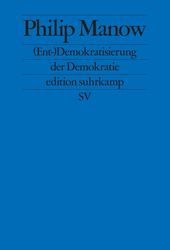
Philip Manow: (De)Democratisation of Democracy (2020)

This book is the optimistic counterpart to Levitsky and Ziblatt, somewhat more demanding but also more original. Manow shows how democracy has become both more open and more vulnerable: more people are participating directly, while traditional institutions are losing their binding force. Many of today's crises arise from internal tensions between participation and representation. The book thus helps to understand the current transformation of democracy not only as decline, but also as the result of ambivalent changes.

Book

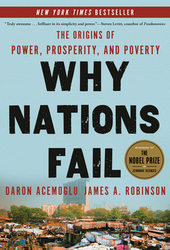
Why Nations Fail: The Origins of Power, Prosperity, and Poverty

To better grasp the broader aims of elite theory, it is worth taking a look at the now-classic work by Noble Prize winners. Daron Acemoglu and James Robinson link inclusive institutions to prosperity.

Book

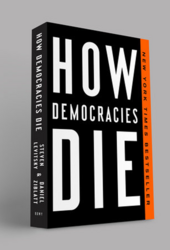
Steven Levitsky / Daniel Ziblatt: How Democracies Die (2018)

You don't necessarily have to share the pessimism of this book to recognise its significance. Levitsky and Ziblatt argue that today's democracies are hardly ever destroyed by coups, but rather by the creeping erosion of democratic norms. The book contrasts current developments in the USA with the Weimar Republic and authoritarian tendencies in Latin America, thereby sharpening our focus on the specific situation of democracy in the present day.

Book

The Future of European Competitiveness

Europe is another focus of elite theory which examines the performance of its elite system. There is no stronger diagnosis of the continents’ challenges than Mario Draghi’s report, "The Future of European Competitiveness" (2024) that benchmarks Europe against China and the United States.

Book

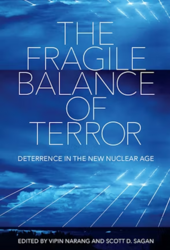
The Fragile Balance of Terror. Deterrence in the New Nuclear Age

"The Fragile Balance of Terror", edited by Vipin Narang and Scott D. Sagan, brings together a diverse collection of rigorous and creative scholars who analyze how the nuclear landscape is changing for the worse.

Book

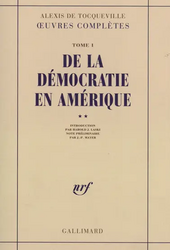
Alexis de Tocqueville: De la démocratie en Amérique (1835/1840)

Anyone who wants to understand the history of democracy, the history of America and the history of the 19th century in a good way will find a wealth of inspiration in this book. Tocqueville was an aristocrat without reactionary airs and graces who analysed the French Revolution and American democracy with critical distance – and in doing so understood them in a good way compared to most of the actors involved. His book on democracy in America is one of the most important classics of modern democratic theory.

Podcast

The Economics Show

Unfortunately, not me but Martin Wolf, the Chief Economics Commentator at the Financial Times, talks to Kenneth Rogoff about Donald Trump's trade policy, the future of the dollar, and what this means for other currencies.

Book

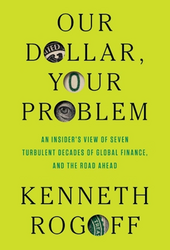
Our Dollar, Your Problem

Harvard Professor Kenneth Rogoff demonstrates that the dollar’s decline began before Trump.

Book

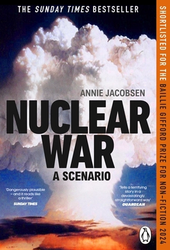
Nuclear War: A Scenario

Up to now, no one outside of official circles has known exactly what would happen if a rogue state launched a nuclear missile at the Pentagon. Second by second and minute by minute, these are the real-life protocols that choreograph the end of civilisation as we know it. Based on dozens of new interviews with military and civilian experts, "Nuclear War" by Annie Jacobsen is at once a compulsive non-fiction thriller and a powerful argument that we must rid ourselves of these world-ending weapons for ever.

Book

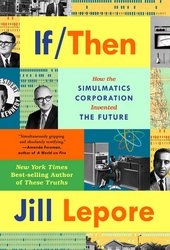
If Then: How the Simulmatics Corporation Invented the Future.

This is a fascinating book that sheds light on early attempts to predict the future using data-driven forecasts and models – long before big data and social media dominated our lives. Jill Lepore takes us on a journey through the history of the Simulmatics Corporation, which in the 1960s attempted to control society through data analysis – first from 5th Avenue in New York for commercial marketing, then in the 1960 election campaign for John F. Kennedy, and at one point even in the Vietnam War. Their story impressively shows how technological developments and early forms of data analysis influenced the political landscape and continue to change our understanding of democracy and power to this day. But it also shows where the limits of the technologisation of democracy lie.

Podcast

Future of AI, Simulating Reality, Physics and Video Games

Demis Hassabis, CEO of Google DeepMind and Nobel Prize laureate, in conversation with Lex Fridman. One central focus of contemporary elite theory is artificial intelligence (AI), as emerging elites redefine the political economy. To understand the nature of the technology ahead, give it a listen.

Series

Yellowstone

"We're steeped in liberal culture" – many conservatives claim that we are saturated with left-wing liberal culture. They say that everything, from films and television to music, is ‘woke’ and ‘out of touch’. However, some productions are particularly successful in reaching conservative audiences. The neo-Western series "Yellowstone", starring Kevin Costner, tells stories about family ties, loyalty, resistance to the state, the conflict between the urban coastal mentality and that of the north-west, and the connection to the land itself.

Podcast

Interesting Times

There are more conservative podcasts than there is time to listen to them all. But Ross Douthat's “Interesting Times” is worth the 45 minutes a week. His guests are mostly conservatives, some very well-known such as Peter Thiel and Vice President JD Vance, others increasingly well- known such as Oren Cass, or (for many of us) yet to be discovered such as publisher Jonathan Keeperman.

Book

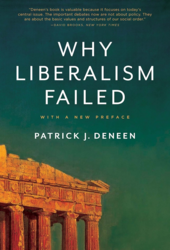
Why Liberalism Failed

In 2018, Deneen published what I still consider to be the sharpest conservative diagnosis of our times. In my view, it is essential reading. Oren Cass often sounds like an echo of Deneen.

Stay focused

From the feeds of universities, think tanks, and the media.
13.11.2025
12.11.2025
11.11.2025
Russia and the US put nuclear testing back on the table. Is time running out for arms control?
Politics

Russia and the US put nuclear testing back on the table. Is time running out for arms control?

Russia and the US put nuclear testing back on the table. Is time running out for arms control? Expert comment LToremark 11 November 2025 Escalating tensions between the world’s two largest nuclear powers come only months before the last remaining US–Russia nuclear arms control treaty expires. Last week, Russia claimed to have successfully tested two nuclear-powered and nuclear-capable weapons: the Burevestnik cruise missile and the Poseidon underwater drone. The announcement comes only months before the last remaining nuclear arms control treaty between Russia and the US is due to expire. The New Strategic Arms Reduction Treaty (New START) places binding limits on the number of deployed strategic nuclear warheads and delivery systems by the world’s two largest nuclear powers. It is due to expire in February 2026, risking the removal of the final guardrail restraining the size and visibility of their arsenals – and increasing the risk of a new nuclear arms race. In a time of deep geopolitical mistrust and diminished diplomatic capacity, preventing escalation and preserving even minimal restraint is an urgent priority.Threats of nuclear testing Related work How likely is the use of nuclear weapons by Russia? Moscow’s announcement has been widely interpreted in the West as evidence of rapid Russian nuclear modernization and has caused alarm among policymakers and media outlets. Moscow has further stated that these new weapons are difficult to detect and capable of evading missile defences.However, there is no independent verification of these tests or the operational readiness of either system. Both have been under development for years and have faced repeated setbacks. The systems are based on old Soviet designs that could never be made operational   due to technical challenges, raising significant questions about the authenticity of Moscow’s statements. The claims should therefore be understood, at least in part, as strategic signalling amid heightened nuclear posturing.The US response has further escalated tensions. After Russia’s announcement, President Trump instructed the State Department to restart US nuclear testing ‘on an equal basis’ to other countries. This statement has created confusion: no nuclear-armed state other than North Korea has conducted a nuclear explosive test since the 1990s. The US Department of Energy has since clarified that the US will conduct ‘non-critical explosions’ that are not nuclear detonations, and legislation has been introduced to prevent any president from authorizing such tests unilaterally. However, this ambiguity has already had consequences. Putin has ordered officials to draft proposals for resuming Russian nuclear testing, citing uncertainty over US intentions. The World Today Related work Why America may be triggering a new era of nuclear proliferation These developments threaten to collapse the three-decade long moratorium on nuclear tests. While a return to nuclear testing would not benefit the US – it already has the world’s largest archive of historical test data – other nuclear weapons states, particularly Russia and China, would stand to benefit more. But the danger is not simply that nuclear testing might resume. It is the escalation of nuclear threats and messaging at a time when trust is at its lowest point in decades, eroding the fragile foundation that post-Cold War arms control has been built upon. This highlights how nuclear rhetoric is increasingly deployed as a tool of political coercion – and how quickly restraint can unravel.The uncertain future of New STARTIn this climate, the impending expiration of New START is of particular concern as it cannot legally be extended again under its existing terms. Although Russia suspended its participation in the treaty in 2023, both Moscow and Washington have continued to observe the central numerical limits on deployed strategic warheads and delivery systems.  Related work As nuclear negotiations show, US bilateral deal-making is no substitute for multilateralism Russia has proposed a voluntary one-year extension whereby both countries mutually commit to continuing to observe these limits. Trump has signalled openness to this idea, but no substantive progress has been made. Importantly, Russia’s claimed new delivery systems (if operational) would already fall under existing New START warhead and launcher limits.During his first term, Trump pushed for trilateral nuclear arms control negotiations with China, rather than advancing bilateral agreements. But involving China in negotiations around a New START extension should be avoided as it would risk stalling or sacrificing any progress altogether. Although China now has the world’s third largest nuclear arsenal, it remains significantly smaller than those of the US and Russia. China therefore has little incentive to accept constraints on its nuclear programme, meaning fruitful negotiations would be unlikely in the short term. If New START expires without even a symbolic extension, the consequences could be significant. The absence of mutually agreed constraints could fuel an arms race in which Russia and the US expand deployed nuclear arsenals, undermining strategic stability. If New START expires without even a symbolic extension, the consequences could be significant.  This would weaken the credibility of the Nuclear Non-Proliferation Treaty (NPT), the main international treaty governing nuclear weapons. Many states already view nuclear weapons states as backsliding on their disarmament obligations. Abandoning the last bilateral nuclear arms control framework would reinforce that perception. While a one-year voluntary extension is not a long-term solution, it is likely the best available option in the current environment. Negotiating a new or more comprehensive treaty is unrealistic given geopolitical tensions, domestic political uncertainty in the US, and a weakened diplomatic and technical capacity within the US government, where key arms control posts remain unfilled.A strategy for stabilizationWhat is needed now is not an ambitious new treaty framework, but a focused effort to preserve the minimum conditions needed for future progress. The first step should be for the US and Russia to agree to a one-year voluntary extension of New START’s central limits. Although this would not restore trust between the countries or halt nuclear modernization programmes already underway, it would prevent immediate further deterioration of the global arms control architecture and lower the risk of miscalculations. It would also signal shared recognition that unconstrained nuclear competition benefits no one.

Chatham House

China’s tech advance means Western corporations must adapt to compete
Business

China’s tech advance means Western corporations must adapt to compete

China’s tech advance means Western corporations must adapt to compete Expert comment thilton.drupal 11 November 2025 Western policymakers should wake up to China’s emerging tech dominance and seek to self-strengthen to withstand the disruptive power of Chinese tech giants. China is winning the tech race against the US in almost all sectors and leaving Europe far behind. Saying this would have been controversial only a few short months ago, but such a realization is now becoming more mainstream. Jim Farley, the CEO of US car giant Ford, warned last month: ‘They have enough [production] capacity in China with existing factories to serve the entire North American market, put us all out of business. Japan never had that, so this is a completely different level of risk for our industry.’And Jensen Huang, CEO of the world’s most valuable company, Nvidia, had a similar take: ‘China is going to win the AI race.’ China is winning the tech race against the US in almost all sectors and leaving Europe far behind.  The risk to some of the largest corporations in the West is stark. As Chinese companies ascend to the cutting edge of global tech, often offering products at sharp discounts to those of Western competitors, disruptive shocks have started to hit some of the West’s largest and most famous corporations. Disruption events come in different forms. Some are preceded by CEO warnings over Chinese competition. These may be followed by the ceding of market share to Chinese competitors either in China itself or in markets overseas. Later, evidence of disruption may come with lowered earnings’ forecasts and the issuance of guidance to shareholders.There is no doubt that Chinese companies are making rapid strides in technological upgrading, often through innovation. Research from the Australian Strategic Policy Institute (ASPI) shows that China leads the US in 57 out of 64 critical technology categories. In the period between 2003-2007, ASPI found that China led in just three of the 64 technologies assessed.Examples from three key industries – pharmaceuticals, electric vehicles and wind power – among many others highlight the impact of China’s disruptive shocks. If Western corporations are to weather these shocks, they need to self-strengthen and adapt with various strategies, supported by meaningful government-led industrial policy. PharmaceuticalsThe challenges faced by Merck and Co, a large US pharmaceutical company, reveal the disruptive power of emerging Chinese pharma companies. Merck’s share price plunged on a few occasions in 2024 and early 2025 due to the declining sales of a popular HPV vaccine, Gardasil, in China. The stress the company felt was partly due to the emergence of a Chinese competitor drug, Cecolin 9, developed by Xiamen Innovax Biotech. The price of Cecolin 9 was set at a 60 per cent discount to that of Merck’s Gardasil.On February 4 this year, Merck shares tumbled 11 per cent in early trade after the company announced it would temporarily halt shipments of Gardasil to China. While Merck said it remained confident in Gardasil’s future sales prospects in China overall, it withdrew its long-term $11bn sales target for the vaccine. Related work China’s economic model will continue to alarm its trading partners Another potential disruption to Merck’s business comes from Akeso, a Chinese biotech company that beat Merck’s Keytruda, a multibillion dollar blockbuster cancer drug, in a head-to-head trial. Akeso won approvals in China for its new drug, ivonescimab, which is now on sale in the country.China’s position as a global leader in pharmaceutical R&D is demonstrated by a series of announcements by European companies to boost their research presence in China. UK-based AstraZeneca pledged this year to build a $2.5bn R&D hub in Beijing. Novo Nordisk, the Denmark-based company, and Roche Group, the Swiss giant, have also announced large expansion plans in China.Electric and hybrid vehiclesChina’s march into electric and hybrid vehicle markets around the world is the most commonly cited example of its disruptive technological power. In September this year, Chinese car companies captured a record 7.4 per cent of all passenger car sales across Europe, up from 3.9 per cent at the start of the year. Some Chinese car companies posted bumper increases in Europe sales. BYD registered a 304 per cent increase in year-on-year sales in the first nine months of this year, while Chery notched up an 862 per cent rise and Leapmotor, which makes ultra-affordable cars, posted a 7,108 per cent increase. The risk to some of the largest corporations in the West is stark. Carlos Tavares, former CEO of Stellantis, warned last month that as Western carmakers stumble, Chinese competitors will be ready to snap them up. ‘The day a Western carmaker is in severe difficulty, with factories on the verge of closing and demonstrations in the street, a Chinese carmaker will come and say ‘I’ll take it and keep the jobs’, and they’ll be considered saviours,’ Tavares said.The share prices of VW, Mercedes Benz, Stellantis and other European automakers are sharply down from the highs they hit in recent years.Wind powerChinese manufacturers of wind turbines have been gaining global market share. In 2024, Chinese companies took six out of the top 10 slots for turbine makers worldwide, according to Bloomberg. Among these, the top four places went to Chinese makers for the first time. European and US manufacturers fell out of the top three, also for the first time.China’s rise is propelled by a domestic market that installed about 80GW of wind power last year alone, or about 60 per cent of the extra capacity installed globally. But the competitive challenge that leading companies such as Goldwind, Envision and Mingyang present to Western competitors GE, Siemens Energy and Vestas lies mainly in the fact that Chinese-made turbines can be up to 50 per cent cheaper. Technological disruption is also underway. Dongfang Electric, a Chinese company, also took the mantle for making the world’s most powerful turbine – a 26MW offshore prototype with blades that are 153 meters in length – from Siemens Gamesa earlier this year. This technological breakthrough is likely to further reduce the cost per unit of electricity generated.How Western corporations can adaptChinese companies are dominating globally or taking greater market share in a range of other industries, including cellular modules, lithium-ion batteries, 5G telecoms equipment, solar power, nuclear power, factory automation, robotics (including humanoid robots), electrical equipment and more.Disruptive events are likely to grow more common across all these key sectors. Western corporations therefore need to adopt a series of strategies to self-strengthen and pre-empt disruptive events before they happen. These strategies may include climbing the technology ladder, including by investing heavily in R&D inside China as, for example, Germany’s VW and Mercedes Benz have done. Western corporations may also consider restructuring to cut costs, so they are better able to compete with Chinese price-setters, as well as strategic alliances to create efficiencies and boost brands. 

Chatham House

10.11.2025