Podcast
The four-part SRF podcast Alpha Boys explores how young men become embroiled in the manosphere, a digital community where influential figures such as Andrew Tate amass millions of followers. The series takes an in-depth look at digital communities where the pursuit of self-improvement and strength can lead to misogyny and incitement to violence.
Book
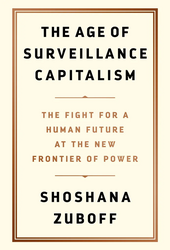
A book by Shoshana Zuboff that provides a good view under a societal perspective to understand the how the passive collection of our behavioral data defines the privacy battle of our time. If you are short on time, jump straight into Chapter 8 ("Rendition: From Experience to Data") to see exactly how our physical, lived experiences are quietly appropriated and turned into digital power.
YouTube Video
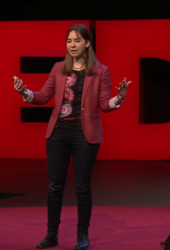
A great TED talk by MIT Professor Dina Katabi explaining the physics and the healthcare potential to a general audience.
Study
The World Happiness Report is the world’s foremost publication on global wellbeing and how to improve it. It combine wellbeing data from over 140 countries with high-quality analysis by world-leading researchers from a range of academic disciplines. The report Shows that life satisfaction is highest at low rates of social media use and lower at higher rates of use, according to data from the Programme for International Student Assessment (PISA) covering seven internet activities for 15-year-old students in 47 countries.
Article
In his article published in Nature Health, Sander van der Linden argues that online harms constitute an urgent societal challenge. He also states that governments must prepare teenagers to use digital technology responsibly.
Article
A must read article in the MIT Technology Review and an overview on how this technology leaped from laboratories into consumer devices.
Article
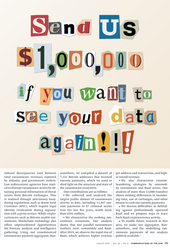
Ransomware attacks are a professional extortion business, not just a technical cyber threat. Drawing on real incidents and current research, this article reveals how attackers organize, negotiate, and pressure victims into paying ransoms. It is an accessible, eye-opening read for anyone who wants to understand what is really driving today’s ransomware wave.
Article
The authors of this article follow the money and show how ransomware attacks really pay off. Based on thousands of real transactions, it reveals two distinct approaches: low-end, off-the-shelf attacks and highly professional ransomware-as-a-service operations, who both have their own business logic and incentives. By tracing how crypto payments move through intermediaries, this article gives readers a clear, accessible picture of the ransomware economy.
Book
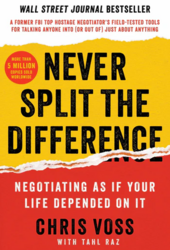
An absolute must-read on this topic. International bestseller with a tried-and-tested approach to negotiations. Particularly worth reading because: practical techniques, psychological approach, exciting stories, diverse applicability.
Podcast
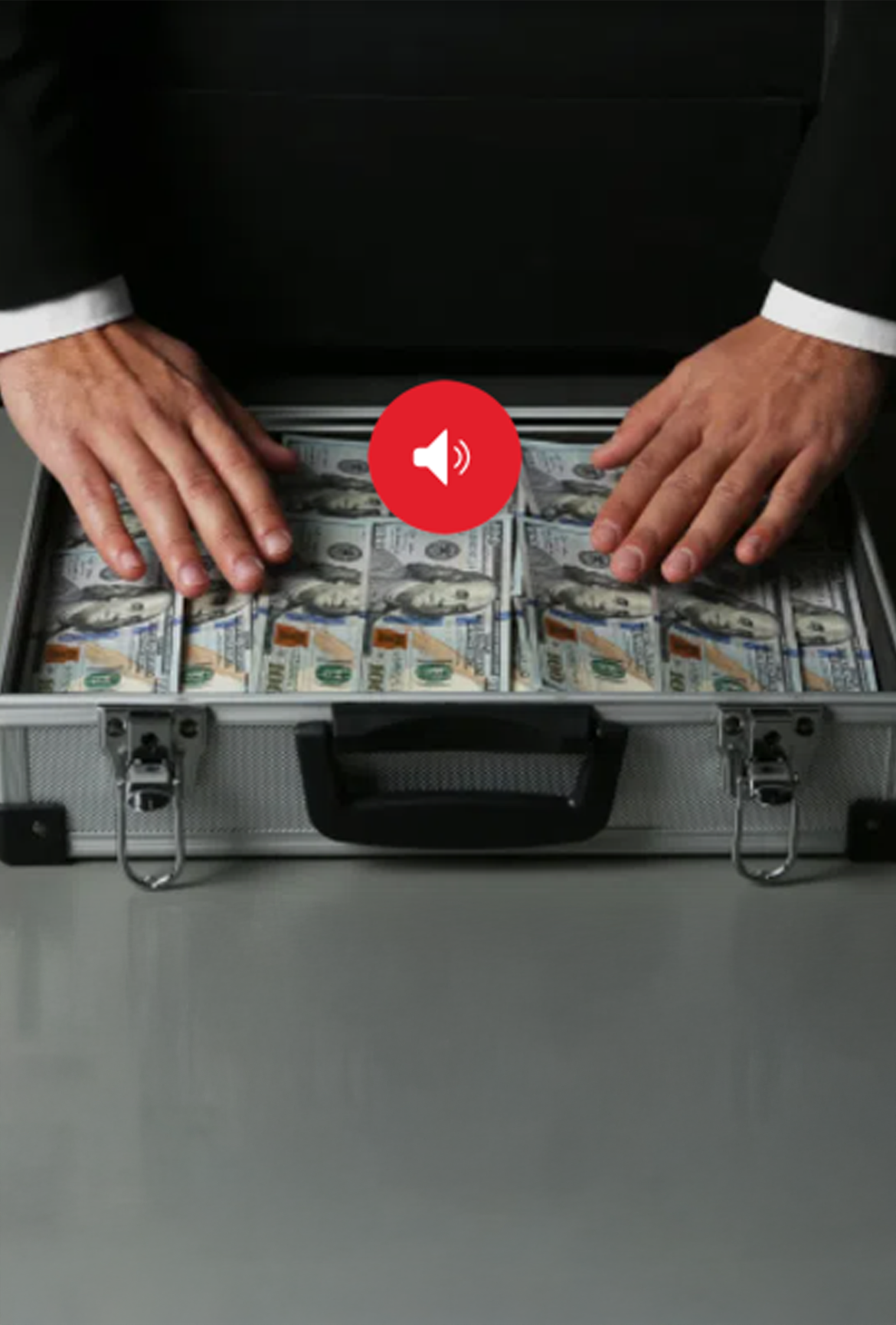
Interesting insights into negotiating with cybercriminals, including insights from one of our absolute top experts.
YouTube Video
Using real-life examples, the documentary impressively shows how ransomware attacks work today and why they pose an existential threat to many companies.
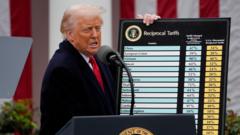
US tariffs stand at the highest rate in decades. But what has the impact been?
bbc
MIT researchers developed a testing framework that pinpoints situations where AI decision-support systems are not treating people and communities fairly.
MIT

As geopolitical tensions from Ukraine to the Middle East disrupt global supply chains, understanding how diverse commodity shocks affect the broader economy has become increasingly important. This column argues that although oil has dominated policy discussions, recent events show that other commodities also play a critical role in shaping macroeconomic outcomes. The authors find the stagflationary impact of commodity supply disturbances originating outside the oil market to be at least as important for both output and inflation.
Center for Economic Policy Research
Efforts to reduce information asymmetries across firms are increasingly at the centre of Europe’s digital regulatory agenda. This column examines how differences in risk-rating precision, cost structures, and product differentiation among Italian auto insurers affect pricing and targeting strategies. It estimates large consumer surplus gains from greater information sharing, driven by reductions in premiums. The gains are concentrated among less informed firms, while losses are largest for those at the top of the information hierarchy. Policy interventions such as the creation of a centralised risk bureau can generate substantial welfare gains but need to preserve incentives for innovation.
Center for Economic Policy Research
Faculty, staff, and students explore what it takes to connect across difference at Community and Campus Life forum
Harvard University
Iraqi civilians are paying the price of the Iran war Expert comment thilton.drupal 1 April 2026 The US-Israeli war on Iran has disrupted oil exports, pushed up prices and deepened fears of electricity shortages. Iraq has been increasingly dragged into the US and Israel’s war with Iran, with both sides attacking each other on its territory. Civilians have suffered as rockets and drones fall near residential buildings in cities including Baghdad and Erbil. The war has also exposed the fragility of Iraq’s economy and society. Most Iraqis are facing this latest conflict with limited financial resources and minimal savings, and with low confidence in the state to protect them from the war’s impact.For many households, the war has caused anxiety over whether they will keep receiving their salaries or be able to access food and medicine. There are also concerns over whether electricity supplies will continue as temperatures rise ahead of summer. Suspected Iranian attacks on two tankers in Iraqi waters near the port town of Al Fao in early March have also highlighted Iraq’s heavy dependence on maritime trade. The disruption to Gulf shipping is already constraining imports and leaving Iraq-bound cargo stranded or delayed. For a country that moves more than 90 per cent of its trade by sea, prolonged disruption in the Gulf risks hitting Iraq’s economy and depriving it of crucial oil exports that finance the majority of the state’s budget. Iraq’s safety net underminedIraq is confronting the war with weaker governance structures and less capacity to shield society from the fallout than many of its neighbours.The Iraqi state budget is the main safety net for much of the population. It provides salaries to millions of Iraqis, and many households still rely on state spending for their day-to-day survival, whether through salaries, pensions or welfare linked to public expenditure. Related work Iraq’s water crisis: Dammed by neighbours, failed by leaders Iraq’s economy is still heavily dependent on oil, with crude sales making up more than 90 per cent of the state’s income. When oil flows are disrupted, state spending is affected. In turn, this hits household budgets through increased rent, food, transport, medicine and education costs. The war on Iran has exposed this reliance by directly damaging Iraq’s export capacity. Baghdad declared force majeure on foreign-operated oilfields after disruption in the Strait of Hormuz halted most crude exports. Iraq still has about $97 billion in reserves, but much of that is not immediately liquid, and reserves can only provide short-term relief. Economists have estimated that Iraq has around two months before salaries are directly impacted, after which the government will have to resort to temporary fixes to keep salaries paid.Across Iraq, basic food prices have risen by 15 to 25 per cent. In the Kurdistan Region, officials report that the price of vegetables usually imported from Iran has doubled, while fuel prices have reportedly risen by more than 20 per cent in some cities. Meanwhile, the dinar has weakened on the black market from the official rate of 1,300 to about 1,550 to the dollar, adding further pressure on household purchasing power. Looming electricity shortagesElectricity is likely to be the most serious way in which the war will be felt inside Iraqi homes. Despite Iraq having large natural gas reserves, it flares most of this gas as it lacks the infrastructure to use it as fuel for electricity. Since 2017 Iraq has instead relied on imported Iranian natural gas to provide electricity. More than 30 per cent of Iraq’s current electricity generation depends on those imports, leaving it exposed to regional tensions. Israel’s 18 March attack on Iran’s South Pars gas field disrupted a significant portion of Iraq’s gas imports. Gas supplies to Iraq have now resumed, but only partially, stabilizing the grid but leaving little margin for further disruption. Related work Iran war: regional shock or global crisis? Independent Thinking podcast The electricity system remains fragile heading into the summer, when demand rises sharply due to the heat. With total generation capacity at only around 24-28 gigawatts and projected peak demand in 2026 at 57 gigawatts, any further disruption could quickly deepen shortages. That vulnerability was already visible on 4 March, when Iraq suffered a nationwide blackout after a sudden drop in gas supplies to the Rumaila gas-fired power plant in Basra.Iraq has previously explored alternatives to Iranian imported gas, including importing gas from Qatar and Oman and efforts to expand domestic gas production. But these are not immediate substitutes. In Iraq, electricity shortages have historically sparked protests, with many citizens believing that years of higher oil revenues should have led to improvements to the country’s electricity infrastructure. The current conflict exposes how little has been done to make the system more reliable, despite repeated warnings. Political fallout?Pressures from the war risk inflaming a set of pre-existing and politically charged grievances. In Iraq, state legitimacy has already been weakened by years of corruption, policy short-termism and uneven provision. As the economic impact of the war ramps up, the public perception that the government cannot be relied on in a crisis matters almost as much as the immediate material impact. Protests over jobs and services were already re-emerging before the war. Earlier waves of protest targeted the ruling elite over corruption and the failure to provide services. Historically, many protesters have also rejected Iranian influence as well as the wider pattern of foreign interference in Iraq enabled by the post-2003 political system.
Chatham House
Syrian President al-Sharaa on Iran war: ‘Syria will remain outside this conflict’ News release jon.wallace 1 April 2026 In his first UK public event, President Ahmed al-Sharaa urged negotiations to resolve the US-Israeli war on Iran – and discussed elections, reconstruction and foreign policy. Syrian President Ahmed al-Sharaa visited Chatham House on 31 March for a conversation with Director and Chief Executive Bronwen Maddox – his first public event in the United Kingdom. The two discussed Syria’s reconstruction, its foreign policy, and its position on the Iran war, before the president took questions from the audience.Asked by Maddox about his government’s position on Iran and the war with the US and Israel, President al-Sharaa said that:‘There is no doubt that Iran… was at the forefront of the conflict led by the [former] regime against the Syrian people. However, after we reached Damascus, we did not have an issue with Iran in Tehran; rather, our problem was with Iran in Damascus, because it was occupying Syrian villages and towns, displacing people, and so on.’ ‘We have held back from opening relations with Iran up to this point. Certainly, the war currently under way is negatively affecting the region by disrupting energy and fuel supplies, which in turn affects the global economy… What we had been advising was that they should look for a negotiated solution, rather than resorting to military force, because that carries major risks.’ Asked by Maddox if Syria would remain neutral in the war, he replied:‘Certainly, unless Syria is subjected to direct attacks by any party, it will remain outside this conflict. 14 years of war are enough for Syria, during which we have paid a very heavy price, and we are not prepared to go through a new experience. Those who have gone through the hardship of war know the value of peace…’ Asked if his government was helping to prevent weapons being transported to Hezbollah in Lebanon, President al-Sharaa said: ‘We, too, have paid the price for Hezbollah’s intervention in Syria over the past 14 years. Hezbollah was also an active partner with the [former] regime in the killing of the Syrian people.‘Nevertheless, after we reached Damascus, we tried to adopt policies that would not harm the situation in Lebanon. We were keen that the conflict should not extend into Lebanon, while at a minimum protecting our borders. Protecting the borders requires that those responsible for securing them prevent the entry of weapons and cases of smuggling.’ Addressing relations with Israel, he said: — Portrait of President al-Sharaa taken at Chatham House by Ander McIntyre ‘We tried through dialogue and discussion. Indirect negotiations began and then moved to direct negotiations. We reached good points, but at the last moments we always find a shift in the Israeli position.’Maddox also pressed al-Sharaa on his 2025 promise to hold elections within five years: ‘Are you still on track for that?’ she asked.‘Certainly, Syria has taken initial steps. We held a national dialogue conference that produced recommendations. After that, we issued a constitutional declaration which stipulated that the first term would be five years as a temporary measure.‘During this period, we also conducted elections for the People’s Assembly, whose first session will begin next month.‘Of course, after five years, there will be further steps, as we have reviewed the laws and laid the groundwork for holding free elections in Syria.’ Here is a video clip of President al-Sharaa discussing the US-Israel war on Iran. You can watch the event in full here.
Chatham House
Russland hilft Iran militärisch und geheimdienstlich - auch bei Angriffen auf amerikanische Ziele in der Golfregion. Die USA bestrafen dies nicht, denn "Trump hält Putin für seinen Freund", sagt Sicherheitsexperte Nico Lange.Götzke, Manfred
Deutschlandfunk