Film
The Cambridge Analytica story, showing what happens when people lose control over their data.
Article
An approachable explanation of how to prove something without revealing it.
Book
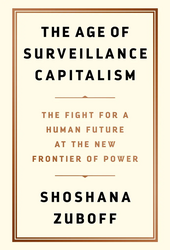
A book by Shoshana Zuboff that provides a good view under a societal perspective to understand the how the passive collection of our behavioral data defines the privacy battle of our time. If you are short on time, jump straight into Chapter 8 ("Rendition: From Experience to Data") to see exactly how our physical, lived experiences are quietly appropriated and turned into digital power.
Podcast
The four-part SRF podcast Alpha Boys explores how young men become embroiled in the manosphere, a digital community where influential figures such as Andrew Tate amass millions of followers. The series takes an in-depth look at digital communities where the pursuit of self-improvement and strength can lead to misogyny and incitement to violence.
Book
A readable classic on surveillance and who controls our data.
YouTube Video
A great TED talk by MIT Professor Dina Katabi explaining the physics and the healthcare potential to a general audience.
Study
The World Happiness Report is the world’s foremost publication on global wellbeing and how to improve it. It combine wellbeing data from over 140 countries with high-quality analysis by world-leading researchers from a range of academic disciplines. The report Shows that life satisfaction is highest at low rates of social media use and lower at higher rates of use, according to data from the Programme for International Student Assessment (PISA) covering seven internet activities for 15-year-old students in 47 countries.
Article
Ransomware attacks are a professional extortion business, not just a technical cyber threat. Drawing on real incidents and current research, this article reveals how attackers organize, negotiate, and pressure victims into paying ransoms. It is an accessible, eye-opening read for anyone who wants to understand what is really driving today’s ransomware wave.
Article
A must read article in the MIT Technology Review and an overview on how this technology leaped from laboratories into consumer devices.
Article
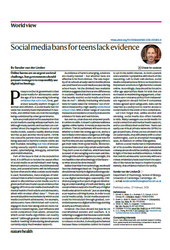
In his article published in Nature Health, Sander van der Linden argues that online harms constitute an urgent societal challenge. He also states that governments must prepare teenagers to use digital technology responsibly.
Article
The authors of this article follow the money and show how ransomware attacks really pay off. Based on thousands of real transactions, it reveals two distinct approaches: low-end, off-the-shelf attacks and highly professional ransomware-as-a-service operations, who both have their own business logic and incentives. By tracing how crypto payments move through intermediaries, this article gives readers a clear, accessible picture of the ransomware economy.
Book
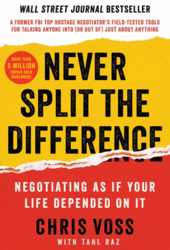
An absolute must-read on this topic. International bestseller with a tried-and-tested approach to negotiations. Particularly worth reading because: practical techniques, psychological approach, exciting stories, diverse applicability.
Podcast
Interesting insights into negotiating with cybercriminals, including insights from one of our absolute top experts.
YouTube Video
Using real-life examples, the documentary impressively shows how ransomware attacks work today and why they pose an existential threat to many companies.

Das Momentum ist auf der Seite der Demokraten. Jetzt geht es um die Frage, ob sie es in einen Wahlsieg verwandeln können. In Michigan kam es im demokratischen Lager zuletzt noch zu einem Eklat.
Tagesanzeiger
Stablecoins compete with banks for households’ holdings of safe and liquid assets, while creating additional demand for government debt. Building on a novel quantitative macroeconomic model, this column discusses how widespread stablecoin adoption affects the macroeconomy. In the baseline scenario, large-scale adoption has small negative long-run output effects. However, the sign and size of the effect depend on fiscal parameters, the regulatory framework for stablecoin reserve holdings, and whether stablecoin demand and issuance originate domestically or abroad. Short-run output effects can be significantly positive as the fiscal space channel activates faster.
Center for Economic Policy Research
Brussels or Beijing? The EU’s ‘Made in Europe’ plans will force the UK to choose Expert comment jon.wallace 29 October 2026 Either way, the UK will be forced to pay a price. The EU’s Industrial Accelerator Act (IAA) is pushing the UK toward an economic confrontation with China it would rather avoid. The IAA plans to introduce new ‘Made in Europe’ obligations, conditioning access to certain public subsidy and procurement schemes on the use of sufficient local, European, content. This is intended, in part, to protect European industry from cheap, high-quality, Chinese goods such as hybrid and electric vehicles (EVs). The UK government, seeking closer economic integration with the EU, wants ‘Made in Europe’ provisions extended to include its firms. But key EU member states are conditioning any extension on the UK aligning with EU economic security measures. A 15 October Franco-German paper said that ‘Made in Europe’ treatment for the automotive sector should only be extended to the UK and a small group of other partners on the condition of both reciprocity and ‘dynamic alignment with EU conditions related to third countries’ investments and on relevant EU trade defense measures’. In practical terms, France and Germany want the UK to impose tariffs on Chinese EVs to prevent the further erosion of their manufacturers’ UK market share. They also want the UK to impose stricter conditions on foreign direct investment into key manufacturing sectors to prevent Chinese firms from qualifying for future EU subsidies or procurement schemes via their UK-located operations. With the next EU–UK summit scheduled for 20 November, this creates a problem for Prime Minister Andy Burnham’s new government. Much of the media reporting has focused on the question of whether the UK will agree to impose tariffs on Chinese vehicles. But the focus on investment is arguably more consequential, given the UK’s desire to attract Chinese automotive manufacturing facilities to Britain. The UK’s China problemUntil now, the UK’s preferred approach to China has been one of cautious pragmatism. It has demonstrated a willingness to intervene with tariffs or other restrictions in the event of acute economic or national security concerns. See, for example, the decision to impose permanently high tariffs on certain steel products or the blocking of a proposed £1.5 billion investment in offshore wind by the Chinese firm Ming Yang. Want to hear more on the future of global trade? Join us at our Global Trade Conference for expert analysis on the shifting rules of the global economy. However, the UK has continued to court Chinese investment in the automotive sector and deepen trade ties in what it considers non-sensitive areas. And, though it has made a commitment to the US to strengthen supply chain security in respect of steel and pharmaceuticals as part of the 2025 Economic Prosperity Deal, there has so far been limited evidence of substantive implementation. The UK’s reluctance to fully align with either the EU or US approach to China is understandable, given its relative size and economic weight. It wants increased trade and investment and relies on Chinese renewables for its decarbonization objectives. But the UK can certainly not afford to be shut out of EU procurement and public subsidy schemes. The EU’s proposed safeguard on hybrid vehicle imports – which would restrict imports above specified quota levels – will also create its own pressures, as Chinese vehicles risk being diverted onto the UK market. It is therefore less of a question of whether the UK will align itself with EU economic security measures than how.The price to payOne route would be for the UK to replicate EU measures wholesale. This would see the UK replicate EU tariffs on EVs and the new hybrid safeguard. And it could potentially include future interventions targeting chemicals, plastics, batteries and wind turbines. The UK would also need to consider equivalent restrictions on foreign investment, reflecting proposed IAA conditions relating to ownership limits, joint ventures, workforce localization and local content in key manufacturing sectors. Yet this approach is not straightforward. The UK does not necessarily have the legal tools available to replicate EU measures and has historically been cautious about breaching its international obligations. China would also be incentivized to retaliate. That could mean anything from initiating its own tariff measures against UK exports to imposing restrictions on rare earths or battery inputs. Beijing may have a greater incentive to make an example of the UK than escalate its confrontation with the EU. The UK is not the only country in the region facing pressure from the EU to impose more stringent controls on Chinese trade and investment as a condition for access to the EU market. Turkey, Morocco and Switzerland are in a similar position. China will be wary of a negative precedent being established and keen to demonstrate that aligning with EU restrictions comes at a price. Indeed, Beijing may have a greater incentive to make an example of the UK than escalate its confrontation with the EU.An alternative would be for the UK to pursue similar outcomes more slowly, using traditional trade defence tools. An anti-subsidy investigation into Chinese electric vehicles, for example, would take around a year to conclude but could provide the government with some breathing space. A safeguard investigation, potentially justified by rising Chinese imports and the risk of trade diversion from the EU, could offer a quicker route. Neither would guarantee the outcome the EU wants. And both would need to satisfy the relevant legal requirements. But they would at least allow the UK to argue that it was responding to evidence of harm to its own industry, rather than simply implementing EU demands. A safeguard also has the benefit, or not, of generally applying to imports regardless of origin, allowing the UK to argue it is not singling out China. It also remains possible that Brussels will attach more importance to the political signal of alignment than to the precise form of the measures adopted.Yet this still leaves open the question of Chinese investment into UK manufacturing. This is of particular importance in the automotive sector. And it will prove more difficult to address without compromising the government’s wider economic objectives. — Watch: David Lubin on what the 2026 Bund Summit in Shanghai tells us about China’s economic engagement with the rest of the world. The government could also seek to demonstrate progress by announcing new economic security tools, such as a proposed anti-coercion instrument. It could also introduce specific restrictions on foreign investment, or repackage existing initiatives, such as new cybersecurity-related restrictions. Such announcements might demonstrate goodwill towards Brussels but they would not automatically satisfy EU demands for alignment on specific measures. The most likely outcome is that the UK seeks to navigate a course through these competing demands, giving the EU just enough of what it wants, while delaying implementation, hoping to avoid the worst response from Beijing. Delay may buy time with Brussels. But Beijing will likely view any such commitment as setting a precedent and retaliate against the UK accordingly. There will be a price for the UK to pay either way. The only question is how successfully the government can minimize it.
Chatham House
The Social.Wiki framework enables anyone to easily edit social websites within the system, while allowing them to choose the content they see.
MIT
Europe’s push for deeper capital markets assumes that cross-border equity ownership matters. This column shows that it does. Euro area listed firms remain heavily owned by domestic investors. When COVID-19 struck, firms in the hardest-hit sectors with more domestically concentrated shareholders cut investment more, lost more value, and raised less equity than peers with diversified shareholder bases. Capital markets union is hence not just about financial integration. It is about real economic resilience.
Center for Economic Policy Research
Zusammenfassung: Selbstverständlich europäisch 2026 5 Minuten
Heinrich Böll Stiftung
Panelists at the Center for European Studies weigh what AfD’s rise means for German politics
Harvard University