







Re-interpreting Freedom

Freedom is considered one of the defining achievements of modernity, yet also one of its greatest challenges. This special issue of HSG FOCUS therefore addresses a highly relevant social issue: how can freedom be reinterpreted in the 21st century? This issue is based on the work of the inaugural cohort of the St.Gallen Collegium, which brought together researchers and thinkers from a variety of disciplines.
The starting point is the observation that freedom is under pressure worldwide. Political polarisation, geopolitical conflicts, economic uncertainty, and technological upheavals pose fundamental challenges to liberal democracies. Against this backdrop, the Collegium’s fellows examined how individual autonomy, political participation and social responsibility can be preserved and developed in changing circumstances.
At the heart of this issue lies the belief that freedom cannot be safeguarded by simple solutions or ideological certainties. In their lead article, Wolfram Eilenberger and Christoph Frei demonstrate how productive dialogue between different academic, cultural, and political perspectives can open up new spaces for thought and action. In their vision for the future of the island nation, 'Toiva 2050', the authors present a thought experiment in which they explore alternative forms of coexistence and freedom.
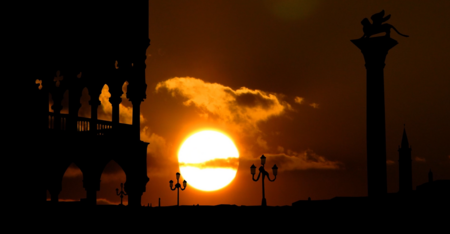
Several articles draw on historical examples to improve our understanding of current developments. Wolfram Eilenberger interprets Venice as the source of an untapped liberal European tradition. In turn, Andreas Lingg uses the decline of the Venetian Republic to illustrate how the withdrawal of elites from public responsibility can weaken innovative capacity, political agency, and societal prospects for the future.
Other authors focus on the economic prerequisites of freedom. Annette Kehnel interprets the myth of King Midas as a warning against a culture of boundless profit-seeking, questioning the idea that material prosperity automatically leads to greater freedom. Tanja A. Gonzalez examines the role of capital markets, arguing that economic freedom is only effective when there is genuine participation in economic decision-making processes.
Finally, Árpád Szakolczai critically examines the current state of liberal democracies. He challenges the fundamental principles of neoliberalism, analysing how media concentration, political power and economic interests influence the freedom of public discourse.
The articles in this issue of HSG FOCUS make one thing clear: freedom is neither static nor guaranteed. It requires responsibility, participation, and a willingness to actively shape social developments. In times of profound upheaval, the St.Gallen Collegium provides valuable insights into the future of democracy, the economy, and society.

Book

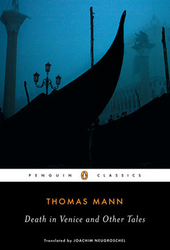
Thomas Mann: Death in Venice (1913)

The grandmother of all novellas – on the joy of living and the lack thereof on the most beautiful beach in the world.

Book

E.F. Schumacher: Small is Beautiful. Economics as if People Mattered (1973)

Schumacher was chief economist and advisor to the British National Coal Board, the country’s largest energy company; he travelled to Burma in 1955 as an economic advisor, and there he began to ask: Is the richest society the one that produces the most – or the one that needs the least to live well? His proposal: Buddhist economics instead of the Midas Touch. Essential reading.

Book

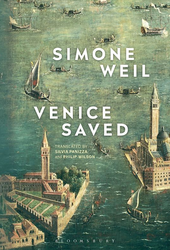
Simone Weil: Venice Saved (1940)

The only play by the philosopher Simone Weil. On the saving power of beauty in dark times.

Film

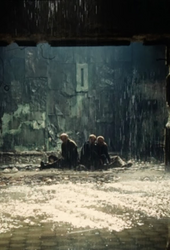
Andrei Tarkovsky: Stalker (1979)

Based on the novel "Roadside Picnic" by Arkady and Boris Strugatsky. The Zone that arose on Earth for unknown reasons attracts attention with inexplicable phenomena that occur there. A rumor has spread that in the center of the Zone there is something that gives a person everything he wants. But staying in the Zone is deadly, and therefore it is strictly guarded. There, each for their own reasons, the Writer and the Professor go, the Stalker leads them to the mysterious center, feeling and understanding the Zone.

Book

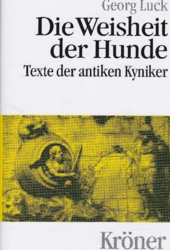
Georg Luck (ed.): The Wisdom of the Dogs. Texts of the Ancient Cynics in German Translation (1997

The Cynics were the representatives of ancient punk philosophy – they lived on the streets, owned nothing, and held up a mirror to the Midases of their time. Diogenes, who lived in a barrel and asked Alexander the Great to please step out of the sun. Here you’ll find the original quotes. Sharp, witty, highly topical.

Podcast

CII's Podcast: The Voice of Corporate Governance (since 2026)

An accessible way to hear corporate governance debates through expert conversations that connect technical rules to their real-world consequences.

Book

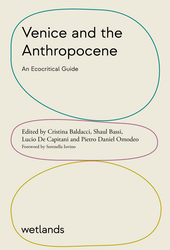
Cristina Baldacci et al.: Venice and the Anthropocene: An Ecocritical Guide (2022)

Full of interesting insights into the lagoon city as an exemplary model of ecological and economic sustainability – and, yes, also of non-sustainability.

Series

Katja Meier: $HARE (2025)

Lena Corbyn inherits a mining empire – and decides to blow it up from the inside. What happens when someone deliberately rejects the Midas touch? The Swiss series explores such a scenario. Thrilling. Award-winning, recommended by Forbes and The Guardian, executive produced by Rhea Seehorn (Better Call Saul). A must-watch.

Book

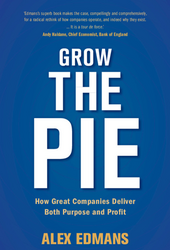
Alex Edmans: Grow the Pie (2020)

A timely exploration of corporate responsibility. Engagingly written with many real-life examples.

Book

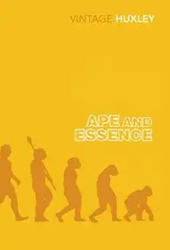
Aldous Huxley: Ape and Essence (1948)

Huxley's dystopian classic is a nightmare vision of the fate of humanity in a post-nuclear world.

Book

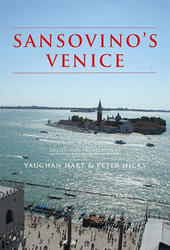
Vaughan Hart / Peter Hicks: Sansovino's Venice (2017)

There are many publications on the crisis in Venice in the 16th century. Rather than providing bibliographical recommendations, here is a travel suggestion. The city's former commercial splendour and strength are still tangible today. The same applies to its leading role in long-distance trade and the arts and crafts. You can visit the Fondaco dei Tedeschi, where goods from St Gallen were sold in those days; Murano, whose glassware was shipped as far as the New World; and the Arsenale, one of Europe’s first proto-industrial complexes. To accompany your travels, I recommend Francesco Sansovino’s city guide, first published in 1581 and now available in a new English edition by Vaughan Hart and Peter Hicks. Sansovino wrote this book with the intention of conjuring up an image of unity in the face of the ever-widening rifts in the Republic’s political and cultural fabric. For those wishing to trace the fault lines addressed in the book, an excursion to the mainland to visit a villa—the newly built country estates of Venetian patricians at the time—is highly recommended. A prime example is the Villa Barbaro in Maser, designed and built by the renowned architect Andrea Palladio. It epitomises the inner turmoil of the upper classes at that time. The villa's patrons, the brothers Marc’Antonio and Daniele Barbaro, spent their entire lives exploring the tension between the countryside and the lagoon, private idyll and public affairs, and detachment and engagement through letters and books.

Stay focused

From the feeds of universities, think tanks, and the media.
Yesterday
23.06.2026
Exploring the societal impacts of AI
Education

Exploring the societal impacts of AI

During the AI and Society Forum, leading MIT researchers examined critical questions about AI’s influence on employment and democracy.

MIT

Security-Update: Wie sich die NATO auf die Krisen von morgen vorbereitet – mit Florence Gaub
Politics

Security-Update: Wie sich die NATO auf die Krisen von morgen vorbereitet – mit Florence Gaub

Während aktuelle Bedrohungen die Welt in Atem halten, blickt die Allied Foresight Conference der NATO in Berlin in die Zukunft. Rund 250 Experten diskutieren über Szenarien, in denen Cyberangriffe auf Stromnetze, Satelliten-Dimensionen und der Klimawandel das operative Umfeld bestimmen. Rixa Fürsen spricht darüber mit Florence Gaub (NATO Defense College Rom). Sie ordnet im Gespräch auch […]

Politico

Wasser, Energie und Land: gemeinsame Nutzung für eine gerechte Energiewende in Kolumbien
Society

Wasser, Energie und Land: gemeinsame Nutzung für eine gerechte Energiewende in Kolumbien

Wasser, Energie und Land: gemeinsame Nutzung für eine gerechte Energiewende in Kolumbien 6 Minuten

Heinrich Böll Stiftung

Empowering Innovation at VivaTech 2026 with CEMS Entrepreneurs
Education

Empowering Innovation at VivaTech 2026 with CEMS Entrepreneurs

Empowering Innovation at VivaTech 2026 with CEMS Entrepreneurs shamasha Tue, 06/23/2026 - 15:38 At VivaTech this year, the CEMS community showed up in force: 90+ students, 30+ alumni and participants representing 20+ member schools came together to connect, learn and shape the future of innovation. Read on to discover the highlights. News VivaTech celebrated its 10-year milestone in Paris, establishing its footprint as Europe’s ultimate startup and tech destination by bringing together key business leaders, 2,000 startups, and 3,000 investors. This year’s event centered around groundbreaking 2026 themes, exploring pivotal global topics such as Artificial Intelligence: Impact, Not Illusion, Productivity Reimagined, Sovereignty & Ethics, and Tech Beyond the Obvious. Recognizing the importance of leadership in these rapidly evolving fields, VivaTech partners directly with CEMS every year to actively foster and push an entrepreneurial mindset among international students and alumni.  The CEMS Experience at VivaTech The collaboration came to life through an exclusive initiative by CEMS Entrepreneurs, which drew an impressive turnout and demonstrated the strength of the CEMS global network. Over 90+ ambitious students representing 25+ CEMS Academic Member Schools joined the conference alongside 30+ experienced alumni from 20+ different CEMS Schools. Throughout the multi-day event, attendees immersed themselves in the future of technology, navigating conference tracks, discovering cutting-edge deep tech, and participating in ad-hoc meetups to exchange ideas on the latest industry trends. “This year at VivaTech, I already spotted amazing innovation especially in robotics, humanoids and new technologies related to agriculture.  I feel that this is an exciting time moving on,” - Jacopo Faini, CEMS Entrepreneurs Lead & CEMS Alum 2023 (UB/ HKUST) Bringing the CEMS community together  Bridging the gap between corporate innovation and community building, a lively Networking Apero was organized by CEMS Entrepreneurs in collaboration with the CEMS Global Office Alumni Relations. Designed for connections, networking, and fun, the gathering offered a relaxed space for the next generation of founders and seasoned tech professionals to build lasting partnerships. By blending industry-leading insights with meaningful community engagement, VivaTech 2026 proved to be an unforgettable launchpad for CEMS entrepreneurial talent. Interested in your entrepreneurial journey? Want to get involved with CEMSies in the Startup sphere, read more at https://www.cemsentrepreneurs.com/.

Bocconi University

Putin’s Asia diplomacy may help Russia avoid isolation. But it won’t deliver his goals in Ukraine
Politics

Putin’s Asia diplomacy may help Russia avoid isolation. But it won’t deliver his goals in Ukraine

Putin’s Asia diplomacy may help Russia avoid isolation. But it won’t deliver his goals in Ukraine Expert comment thilton.drupal 23 June 2026 Moscow’s recent engagement with ASEAN and Beijing shows it is not as isolated as Western countries had hoped. But it will not end the war in Ukraine in Russia’s favour. As G7 leaders restated their united support for Ukraine and vowed to increase economic pressure on Russia, President Vladimir Putin was hosting leaders from the Association of Southeast Asian Nations (ASEAN) at the ASEAN-Russia Commemorative Summit in Kazan. There, Putin could point to a very different diplomatic reality: none of the leaders present had severed ties with Russia or joined the West in treating it as an international pariah.This symbolic contrast is important. More than four years after the full-scale invasion of Ukraine, Russia has not been isolated in the way many Western governments expected or hoped. Large parts of Asia, the Middle East, Africa and Latin America have continued to engage with Moscow. This is often out of strategic interest rather than sympathy: Russia remains a nuclear power, a permanent member of the United Nations (UN) Security Council, a major energy exporter and a useful partner for states that do not want the West to define their strategic choices. Putin’s Asian diplomacy should be taken seriously, but it has its limits.  But the more important issue is whether Putin’s renewed diplomatic visibility represents a real comeback – or rather an attempt to compensate for Russia’s lack of progress in gaining international support for its position on Ukraine.The Kremlin’s challenge is not that Russia has no partners. Putin’s visit to Beijing last month and the Kazan summit, which concluded on a commitment to deepen ASEAN-Russia cooperation, gave Putin political platforms and opportunities to bolster his status. But these partnerships cannot deliver Putin’s priority goal: a political settlement on Ukraine on Russia’s terms.Ukraine remains stuckPutin’s failure to respond meaningfully to Ukraine’s President Volodymyr Zelenskyy’s open letter and invitation to meet is revealing. The Kremlin still appears to believe its ‘strategy’ of endurance will deliver its war aims: hold the line, grind forward where possible, wait out political cycles in the West, and reserve the option of diplomacy for only once the terms have shifted decisively in Russia’s favour.There is a brutal logic to this. Russia has shown that it can sustain a long war. Western support for Ukraine remains politically fragile and the US is increasingly unpredictable. European military production is improving, but not yet at the scale required to transform the war quickly. Related work Hungary’s reset with Ukraine is good news for European deterrence  However, Russia’s endurance has not produced a diplomatic breakthrough. It has so far failed at forcing Ukraine to accept its territorial claims. It has not split the G7 either. And it has not persuaded China, India or ASEAN states to endorse its preferred endgame. The result is that while Russia looks less isolated globally, it has not been able to persuade others to support its position on Ukraine, its most important – if not existential – issue. This is why the recent European debate over opening communication channels with the Kremlin matters. These discussions do not amount to reconciliation. Instead, they show that Europeans are preparing for the diplomatic phase of a long war – even if they disagree between themselves over who should conduct this diplomacy and on what basis.For Moscow, such debate can usefully be presented domestically and internationally as evidence that Europe is slowly realizing it can’t isolate Russia forever. But, in reality, Europe is not preparing to go back to business as usual. It is trying to avoid being excluded from any eventual negotiation while simultaneously rearming, hardening its eastern flank and reducing long-term dependence on Russia. China’s rolePutin’s visit to Beijing in May confirmed China’s central importance to Russia’s wartime resilience. China has become Russia’s indispensable economic partner: a buyer of Russian oil and gas, a supplier of industrial goods and a channel through which Moscow can blunt the impact of Western sanctions.But the Russia–China relationship is not a coalition for victory in Ukraine. Beijing has every interest in Russia distracting the US, weakening Western unity and accelerating the transition towards a more fragmented international order. It has far less interest in being dragged into Russia’s war or absorbing the costs of a direct confrontation with the West over Ukraine.This distinction is crucial. China helps Russia to endure. But it does not help Russia win diplomatically. The Russia–China relationship is not a coalition for victory in Ukraine. In fact, the war has made Russia more dependent on China at precisely the moment when Moscow wants to present itself as an independent pole in a multipolar world. The Kremlin can speak of strategic partnership, but the asymmetry is obvious. Russia needs China economically. China values Russia as a useful partner, but not as an equal strategic centre.This limits what Putin’s Beijing diplomacy can achieve. It demonstrates that Russia cannot be excluded from Eurasian politics. It does not demonstrate that Moscow can shape the terms of peace in Europe.The Kazan summitThe ASEAN summit offered a broader test of Russia’s influence in Asia. It shows neither a Russian collapse nor a comeback.For countries seeking to avoid binary choices between Washington and Beijing, maintaining relations with Russia still has value. Russia has long-standing defence ties with several Asian states, important energy roles, and diplomatic weight at the UN. Some governments may also value Moscow as a partner that does not attach liberal political conditions to cooperation. But the quality of Russia’s influence has changed. Before 2022, Moscow could claim to be an autonomous great power in Asia: a third pole alternative to the US and China with military, diplomatic, cultural, political and technological influence.  Related work China and Russia’s strategic duo endures – but its limits are clear The war has weakened that claim. Russia’s defence industry is consumed by Ukraine. Sanctions complicate payments, logistics and technology transfers. Its diplomatic bandwidth is heavily absorbed by the war. Most importantly, its growing dependence on China makes it harder for Asian states to see Moscow as a true counterweight to Beijing. This is especially important in Southeast Asia. ASEAN states do not want to choose between the US and China. But nor are they looking to join a Russian camp. They will trade with Moscow, buy from Moscow where useful, and engage Moscow when it serves their interests. This engagement shows Russia is not isolated, but it does not reflect Russian leadership. Russia collecting herself?Putin’s Asian diplomacy should be taken seriously, but it has its limits. The West’s failure to isolate Russia globally is a real achievement for Moscow. But while Russia’s partners may reject the Western pressure to isolate Moscow, most of them have not endorsed Russia’s war aims. They are preserving options, not joining a project. They are engaging Russia because it is useful, not because they want Russia to define the future of European security.

Chatham House

New chip could help tiny robots traverse complex environments
Education

New chip could help tiny robots traverse complex environments

Researchers combined an efficient algorithm with dedicated hardware to rapidly generate 3D maps for navigation using minimal memory and power.

MIT

China shock 2.0 and the euro area: Cheaper imports, tougher competition
Business

China shock 2.0 and the euro area: Cheaper imports, tougher competition

Chinese goods exports have expanded sharply since 2020, with Chinese firms increasingly competing in advanced manufacturing and technology sectors. This column shows that the dominant factor driving this export growth is weak domestic demand, while government subsidies and technological upgrading play a smaller role. For the euro area, lower import unit values from China reduce consumer prices and lower capital accumulation, while stronger Chinese competition in third markets weakens export growth. The long-term challenge is to ensure that the gains from lower import prices are accompanied by policies to support competitiveness and de-risk affected upstream sectors.

Center for Economic Policy Research