Article

Article

Realising an increased freedom for everyone is a proclaimed aim of the modern world, shared by the otherwise quite different currents of British liberalism and French revolutionary Enlightenment. But did it really succeed? Are we free, now? Or, at least, much freer than we were before modernity?
Asking such a question with at least some hope of a meaningful answer requires a good basis and starting point. I pretend that, through accidents of history and biography, I can at least try to explore a path. There are three developments, or events, that I will rely upon, as such a start. The first is the historical experience of Communism, where freedom was most evidently taken away, in an unprecedented manner, from whole countries. Somebody who went through the Communist experience could never take the question of freedom lightly – especially one who was born in Hungary, shortly after the Soviet suppression in November 1956 of the Hungarian freedom fight.
The second is the exemplary case of Sándor Márai, the writer who in recent decades gained world-wide recognition, by novels written well over half a century before. Márai was relentless opponent of both Nazism and Bolshevism, leaving Hungary in 1948 and never returning, thus terminating his writing career, as he could not live in a place where human freedom was made impossible. Yet, already after the end of WWII, he perceived that freedom is under threat in the West as well, due to the excessive attention devoted to security matters in an increasingly hedonistic culture – a perception only confirmed by later developments, especially the Covid debate.
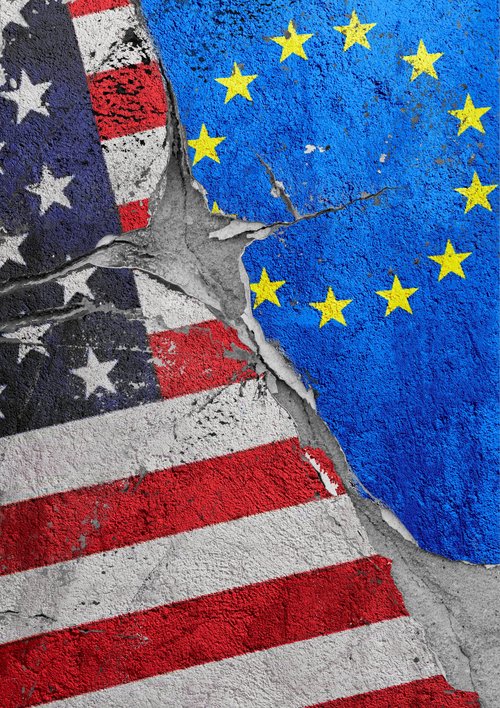
Finally, the events of 12 April 2026 also have their theoretical relevance, for the question of freedom. The central issue, to be sure, is not whether Hungary will fall in line with Brussels, or the excesses of the modern Western avantgarde metamorphosed into mainstream; rather, the exact reasons and modes why the election results were lived in Hungary as a liberation comparable to, or even going beyond, 1989.
Here it is important to emphasise that the Orbán government, which ruled Hungary for 16 years, gained and extended its mandate through free elections, which provided it a legitimate 2/3rd majority in Parliament. It was widely feared, both inside the country and outside, that in case of a loss, Orbán would find ways to hang on to power. This did not happen.
But, if this were the case, who oppressed, evidently, the Hungarian people for 16 years? Was it not the “people” itself, by its votes? But how and why? Was it in a kind of protracted stupor? And what does it all mean, for the possibility of freedom, in a modern mediatic mass democracy?
Let me single out this one element, certainly of major importance in this entire figuration: the media. The free media is a cornerstone of modern democracy, connected to the right of free speech, free enterprise, and similar key values. This seems to be so evident that it hardly requires words. But is it really so? And what does it exactly mean? And are the media free to do anything they please?
Orbán started his manoeuvres, in 2010, by gaining control of the media. But the matter started earlier. Orbán was right in perceiving that the then actually existing media were hostile not just to him, but the values and policies on the basis of which he was elected. This had a reason: at that time the various media were still very much under the control of people, and forces, who had close ties to the previous regime, and who gained further space through the socialist governments of 1994-98 and 2002-10. There was indeed a problem with the media; this does not justify but helps to understand the strategy of Orbán. But, then, what exactly is the reason for such media power and characteristics?!
A serious revisitation of the media, in its relationship to freedom, immediately goes into the heart of my research theme, and problem: freedom beyond liberalism, or perhaps neo-liberalism.
This can be best seen by considering closely the metaphor of the media as a marketplace of ideas. Anybody can say and publish anything about anything, except what is against the law, in the analogy of the free market, right?! Yes, but what if the origin, and the hard reality, of the modern economy is not the market, but the fair? Where nobody knows anybody, and anything about the supposedly world-changing products suddenly offered, and so where not correct information is offered to rational customers, but rather gullible people are bombarded by ruthless advertising machineries? Welcome to hypermodernity!
This way of framing the question has further economic and political implications. Economically, the media, for obvious reasons, everywhere and always, through the internet even more than in the printed press, develops towards oligopolies or even monopolies. And the central interest for any profit-driven company is not truth or social well-being, but money-making. And here comes the major trick of neoliberalism, back to the 1951 volt-face of Milton Friedman and Aaron Director, the source of the difference between classical liberalism and neoliberalism: instead of being concerned with the power of large organisations, especially monopolies, as much as with governmental power, as true classical liberals were, the new, and “winning” idea of Friedman was that monopolies on a “free market” act “as if” there was free competition. Which, however, is just an assumption – a favourite word of economists, but not a guarantee of truth.
The problem with the "market of ideas", however, is even more serious than the market of "simple goods", as a main player here is the government, not forgetting the other political forces, like parties and movements; and also the various intellectual fashions which try to influence politics, and so are attempting to gain influence over the various media outlets. For example, by buying them.
This leads to the crucial question, both political and intellectual, whether and how it can be prevented that the media, always under the control of a narrow group of billionaires and their various cronies, turns into a brain-washing propagandistic machinery.
Though some might say that this is irrelevant, as Orbán, after all, failed, despite the enormous efforts expended to control the media. The opposition was denied almost any voice, yet it managed to win – helped by the social media.
So, after all, all is fine? There are strict limits to the possibility of propaganda, where at least the internet is free?
We should certainly continue researching these questions, both historically and theoretically, and by closely investigating current developments.
Book
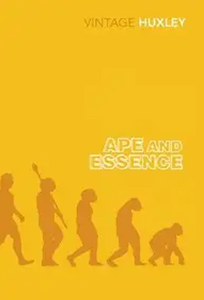
Huxley's dystopian classic is a nightmare vision of the fate of humanity in a post-nuclear world.
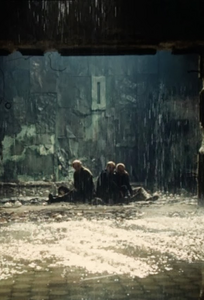
Film
Based on the novel "Roadside Picnic" by Arkady and Boris Strugatsky. The Zone that arose on Earth for unknown reasons attracts attention with inexplicable phenomena that occur there. A rumor has spread that in the center of the Zone there is something that gives a person everything he wants. But staying in the Zone is deadly, and therefore it is strictly guarded. There, each for their own reasons, the Writer and the Professor go, the Stalker leads them to the mysterious center, feeling and understanding the Zone.