

Article

Article

And what do you mean by freedom? It is the very nature of this question to elicit a wide variety of answers. While a philosopher might be inspired to offer an abstract definition ("Freedom is the ability to initiate a state of affairs of one’s own accord"), political scientists will emphasize fundamental democratic rights to political self-determination, whereas economists will place the right to property and the freedom to enter into contracts at the forefront of their considerations. Or should we not rather begin in very concrete terms: by recalling a personal experience of freedom, a biographical event in which, perhaps for the first time in one’s life, one felt and understood oneself to be completely free? The first time riding a bike without training wheels, one’s first holiday, one’s first pay cheque!
All these possible answers have their own validity, their own truth. It is precisely in this, one might say, that human freedom is rooted first and foremost: in the fundamental openness to answers to the question in question. Against this backdrop, then, let us consider another option: which place – or, more specifically, which city in the world – represents freedom above all else for you? Naturally, the cultural memory of Western modernity offers several standard answers: New York or Paris! Berlin and London! Amsterdam, Geneva, Athens! Might Dubai even be mentioned by now? Once we’ve listed them like this, it also makes sense to arrange these cities in historical order. For indeed, each of them opened up a newly gained horizon of freedom which, at times, radiated normatively across the entire cultural sphere, and soon across the entire globe. While Amsterdam was regarded as the leading centre of newly gained freedoms in the 17th century, in the 18th century it was arguably London. It was soon superseded by Paris, and then by New York at the start of the 20th century, until, by the end of the millennium, Berlin became the frontier city of future freedom.
And today, in the year 2026? Where should a discerning gaze turn, were the question to arise as to which city on earth stands, in a special, even exemplary way, for a conception of freedom capable of imagining this planet – soon to be home to 10 billion people – as one that is sustainably free?
Certainly, none of those mentioned so far. Instead of, in the face of such a loss of bearings, imagining libertarian new settlements on the high seas or even on alien planets – as, for instance, Californian tech autocrats do – we should consider a return to the actual place of origin, and thus the cradle of freedom, of our modern age. Namely: Venice.
So there, I’ve said it. And of course, I know what you’ll object to now. Venice, of all places. This non-place, sinking into its own unreality, plagued by overtourism, rip-off prices, museumification, cruise ship terror and Thomas Mann-themed kitsch. None of this is directly disputed. And yet it does not detract in the slightest from this city’s unique power. For, as I was able to experience first-hand this spring, nothing one may have previously read, seen or heard about this place can prepare one for the revelatory force that Venice exerts, particularly on first-time visitors. Venice is a promise of freedom that remains unfulfilled to this day.
Can my poor, old, weakened and increasingly besieged continent even begin to grasp what promise this city once held – and still holds – for it? It is precisely this question that may determine its – our – future. For nearly 1,000 years, Venice existed as a sovereign republic of free trade and innovative craftsmanship. And at the height of its glory in the 15th century, it inspired a sense of wonder akin to that which preceded creation itself. Neither Amsterdam, nor London, nor New York, Shanghai or Dubai should be expected to come close to matching the sense of awe that Venice – even to this day! – is capable of instilling. How could people have created this? This beauty? This wealth? This stony balancing act in the midst of the sea? The first answer, of course, is: they did not create Venice. At least not on their own.
If there is one place on earth that brings home the absurdity – which can only be described as pathological – of all the dualisms upon which later, globalised modernity is based, it is the vibrant, porous lagoon city on the Italian Adriatic: Culture and nature, technology and art, land and sea, eternal substance and transitory accident – each of these fundamental modern divisions is healthily eroded by the very existence of Venice. Never have economy and ecology found each other more convincingly. Another world, another way of relating to the world, was therefore possible. It still is.
Instead of the merciless terror of transparency, Venice’s free citizens relied on the egalitarian power of recurring masquerades. Instead of regressive, ultimately peasant-like scepticism towards growth, they relied on the infinite potential for refinement inherent in human ingenuity. Instead of isolationism, they relied on free trade; instead of oceanic world domination, on a Mediterranean order centred on the inland. And yes, rather than being stuck in traffic, cars will travel on carefully balanced barges!
Of course, these are all idealised descriptions. But they are also truths that can still be marvelled at in concrete terms today. And isn’t that precisely what this continent, facing grave and ominous trials and our increasingly cornered concept of freedom, might most urgently need at present: a vision that breathes new life into it, one it can believe in, a utopian place right at its very heart, a place where its boldest dreams have come true?
Anyone wishing to understand freedom anew in 2026 should start with this city! All is not yet lost. And the sun over Venice’s St Mark’s Square – I have seen it with my own eyes – is, even as it sets, a radiant star of the future.
Book
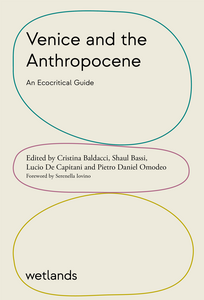
Full of interesting insights into the lagoon city as an exemplary model of ecological and economic sustainability – and, yes, also of non-sustainability.
Book
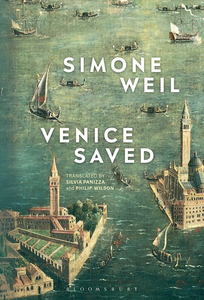
The only play by the philosopher Simone Weil. On the saving power of beauty in dark times.
Book
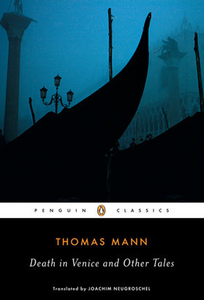
The grandmother of all novellas – on the joy of living and the lack thereof on the most beautiful beach in the world.