



Article

Article

Interwoven with conceptions of freedom is a basic, underlying need for security. People desire safe homes, communities, schools, and workplaces. We want spaces to share ideas and opinions without fear. We want the sense that the future holds enough stability for us to work toward our goals and dreams, such as building a career and buying a house. AI systems are beginning to reshape every dimension of our security including how we share ideas and communicate, how we make economic decisions from the household to the global scale, and how we secure our most basic physical safety from the household to the community and between states.
Public debate about AI tends to concentrate on a handful of dramatic threats such as superhuman artificial general intelligence, killer robots, or mass unemployment. These threats, however likely or unlikely they may be, crowd out an immediate and more important set of questions such as: How is AI reshaping our security in the rooms where we sleep, the markets where we earn, and the public squares where we argue? How can AI systems protect us, and where does their use expose us? Ultimately, AI’s effect on human security, and by extension, freedom, is broader than the headlines suggest as it is already reshaping many facets of daily life that are directly related to human choice and judgment.
We usually picture a threat to freedom as coercion: someone forces us to act against our will. That picture is too narrow for what AI is already doing. No one compels us to use a dating app, buy from an online advertisement, or follow a particular influencer in our social media feed. Yet, the information that is presented to us is algorithmically managed, altering the information we use to make choices in an almost imperceptible way. This is different than traditional advertising or marketing as information curation via AI systems is individualized and continuous in a way a newspaper front page or T.V. commercial never can be. Put simply, the same AI curated feed shows each of us a different world, adjusts in real time, and leaves no shared artifact to point to.
The soft influence that is occurring is important because our individual freedom is grounded in having genuine alternatives. Freedom of choice requires reliable information, so our decisions track the world as it is. And we require room to reflect as well as the mental space to weigh an option before we take it. We aren’t truly free if there are invisible obstacles blocking our view and our options. But AI, deployed irresponsibly or in a haphazard way, can arrange our path. Each time we scroll, search, or accept a suggested route, an algorithm has already decided what we see as well as what we never encounter. The systems have learned that opposing views lower engagement, so they tend to confirm what we already believe. The same logic reaches into shopping, dating, and the news that informs us, filtering the information and crowding out the space we once used to reflect on options and possibilities.
A free choice is one made among real options, on the basis of trustworthy information, with time to think. By that standard, freedom can be lost without any intentional malice. The threat comes from systems that gently arrange our world until a system’s incentives feel like our own. However, the same powerful AI systems that can be used to shrink our world could, by design, widen it, surfacing alternatives we would never have found in the past. For this possibility to work, we have to want to be challenged, to treat the comfortable confirmation of our views with suspicion rather than encouragement. A free society needs citizens who seek out friction and tools built to provide it. Government regulation aimed at ensuring responsible AI systems can help, but we have to want to be challenged and be willing to spend time applying human judgment with intentionality to the information that is presented to us.
To understand the impact AI is having on our lives, we can also consider the steady stream of data that we are all producing on a daily basis that AI systems package and sell. For example, an energy consultant visited my home last week. One of the topics we discussed was heat pumps. I’ve never done research on heat pumps nor requested information about them online, but the next day, as I was reading a news article, all of the ad space was for heat pumps. The unsettling experience of seeing an advertisement that echoes a private conversation provokes the feeling that we are being listened to, but the mechanism behind it is the power in inference drawn from our data, not a microphone. The location information of the energy consultant (my home) paired with the time of day (during work hours) helped an AI system sell targeted ad space to heat pump companies so that I would see those ads.
Another example relates directly to the security of our homes. A “smart” doorbell with facial recognition can identify a stranger at your front door. But this information comes at a steep cost to the privacy of everyone who passes within the camera’s view, including neighbors who never agreed to be seen and whose images may flow to others without their knowledge. A smart home can also mimic the lights of an occupied house to deter a burglar while simultaneously opening a new path for an intruder to enter through the network. In fact, the broad adoption of AI is presenting new risks and new opportunities simultaneously at every level. If we look beyond our own individual choices and homes to how AI can impact our communities, this fact is very clear. For example, in our communities we can look to the high-definition security cameras that are installed in public spaces, such as the St. Gallen Marktplatz, in the name of community safety. The same capability that promises protection redraws the boundary of public life, and it does so without ever presenting the question of what we want. These examples show the loss of agency: a decision with real stakes and real alternatives, made on our behalf and outside our awareness.
If we take an even broader view, we can consider the case of Volt Typhoon, in which a Chinese-sponsored hacker group established persistent, hidden access to critical infrastructure including water and power systems in communities across the United States using AI systems. In this example, bad actors used AI tools to map networked infrastructure, searching for vulnerabilities that could be exploited. Not surprisingly, the same AI tools that were used to infiltrate the critical infrastructure of communities across the U.S. can be used to flag an intrusion and protect the community.
In other words, almost no AI system is simply good or bad. The multi-use nature of AI means that a free and secure society cannot simply categorize AI tools into permitted and forbidden and consider the matter finished, because the very same capability shifts from helpful to harmful depending on who wields it and to what end. Our work as a free and secure society is not to approve or ban any particular system but to understand the tradeoffs of using a system, and then to choose how to engage with the system with those tradeoffs in mind. The multi-use nature of AI directly relates to freedom as it means that we can choose how, when, where, and why we are using any particular system. Abdicating that choice is itself the loss of agency. However, making these choices requires a level of technology literacy we have not yet built at scale. It also demands that we treat the choice as ours to make and take responsibility for our choices. Refusing to engage by deferring to the default a vendor or an agency has chosen is a decision and usually the one that surrenders the most agency.
The tradeoffs presented by AI systems grow heaviest in armed conflict, where the conversation too often fixes on “killer robots.” The reality is that AI now runs through every part of military and defense operations, much as it runs through civilian life. Platforms that fuse data from many sensors support high-stakes decisions by compressing a flood of information into a single recommendation. In fact, reporting has described tools known as Gospel and Lavender being used in Gaza that flag structures and individuals as potential targets and hand a human operator a recommendation with a confidence estimate attached.
We must ask, what becomes of human judgment once an AI system shapes the choice about when to take a life? International humanitarian law requires a person to weigh whether an attack is proportionate to a legitimate military objective and what concrete steps protect civilians. How a confidence score carries that responsibility is not at all clear. A figure such as ninety percent is a system output offering no account of what it weighed or what the remaining tenth contains. At best, such a number can inform the human who decides.
This is not an argument against technology. No military can responsibly forgo capabilities its adversaries will use, and the war in Ukraine shows how fast both sides now innovate. To choose not to use AI tools in the face of an opponent who will is dangerous. Rather, countries must stay militarily competitive while keeping faith with the principles their society claims to stand for, such as democracy and freedom, because a state that abandons those principles to defend itself has hollowed out the very reason for the defense. Designed and used well, the same AI systems can fold information about civilian populations and humanitarian operations into their analysis and protect civilians rather than endanger them. Just like in our daily lives, homes, and communities, the technology used to defend our society does not decide how it will be used, we do.
For me, there are no straightforward answers about how AI will reshape human security or how the tradeoffs we choose to accept will impact our freedom. Nearly every AI system can protect us or expose us depending on the development process, the use case, the context, and the people involved.
What is clear is that freedom in an age of AI is not the mere absence of coercion but the active maintenance of real alternatives and reliable information with the space to make deliberate choices. The task before us is to understand the technologies well enough to see what they cost us in relation to what they offer, and to intentionally decide how, when, where, and why we use them to make ourselves secure in every sense of the word.
Image: Adobe Stock / Leon

Book
For a contemplative work about the future of AI, autonomous robotics, and human nature read Nobel Laureate, Kazuo Ishiguro’s Klara and the Sun.
Book
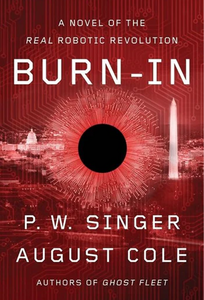
August Cole and P. W. Singer’s book "Burn-In" is a fast-paced thriller grounded in deeply researched fiction about security, conflict, and AI.
YouTube Video
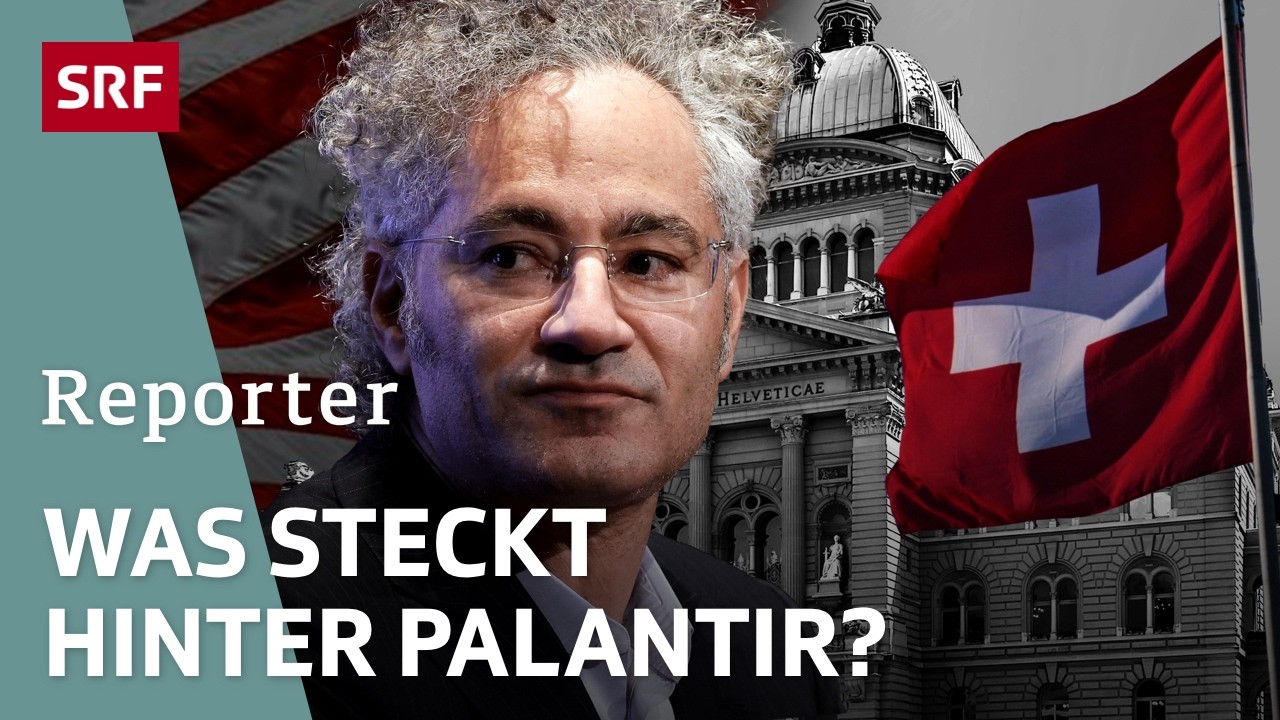
A well-researched documentary from SRF on Palantir’s efforts to supply the Swiss government with AI tools (I was interviewed for this documentary).
