





Article

Article

King Midas is famous. He was the unrivalled high-flyer in the world of the rich and beautiful. Nothing restricted his freedom – he need only snap his fingers, and the world obeyed. Wealth, power, prestige: all there, all available at any time.
One night, he helped the drunken god Dionysus out of a tight spot. In gratitude, Dionysus granted him a wish. Midas wished that everything he touched would turn to gold. Dionysus was speechless. He was the god of wine, an expert in matters of drunkenness; nothing human was alien to him, yet this wish surpassed all the folly he had ever known. "How stupid can you be?" he thought to himself. But a promise – especially a divine one – is a promise. He granted the wish.
King Midas was delighted. Whatever he touched turned to gold. He roamed through his kingdom, touching flowers, trees, animals, stones – everything was transformed and carted off to the royal treasuries. Today, one would say: completely detached. Like Major Tom, he floated weightlessly through the business world, closing one deal after another. Share prices soared, returns on investment skyrocketed.
However, he had forgotten one tiny, little thing. A little thing that was to ruin everything.
When he – exhausted, intoxicated, in the euphoria of boundless freedom – wanted to dine with his entourage that evening, he reached for the cup. Gold. He tore off a piece of bread. Gold. Meat, fruit, wine – everything his fingers touched froze, glistened, was dead. You cannot eat gold. You cannot drink gold. The richest man in the world starved to death on his own wealth. He still did not understand what was happening. He tried again. And again. Perhaps a mistake. Perhaps a bad dream. The Midas Touch – surely that had been the royal road to omnipotence. He was Midas. He was untouchable. He had everything.
Then his daughter entered the hall. She ran towards him – uninhibited, unsuspecting, as children do. He saw her coming. He wanted to stop her, wanted to scream, wanted to step back. But his body would not obey what his mind still refused to accept. He took her in his arms.
His own child turned to gold. Frozen. Cold. Dead.
In that silence – that absolute, paralysing silence – the illusion collapsed. Inevitable, and far too late. What he had taken for freedom had long been a cage. He had simply not seen the bars – because they were made of gold.
The story is ancient. Hesiod tells of Midas in the 8th century BC, Herodotus praises Midas, the rich king of the Phrygians, and Ovid, a great Roman poet, introduces the episode involving his daughter: that Midas is destroyed by his own greed is merely the logical consequence of his folly.
But the fact that he drags his descendants down with him – his own child, all those who will inhabit a world after him that he has transformed into a magnificently glittering but, alas, lifeless one – that is chilling. The punishment does not befall the one who deserves it. It befalls the child. The wrong people foot the bill.
Let’s call it the Midas syndrome: the insatiable desire to turn everything to gold – to view the world as a geopolitical platform that facilitates nothing but deals and profits. The logic behind it is often frighteningly simple: Who gets access? Who comes first? Who gets the contract? Midas realised too late that with his gift he was not only bringing about his own downfall – but destroying the very foundations on which everyone lives.
You don’t have to look far to find Midas again. But before we name names, it’s worth asking a simple question: what does the Midas Touch actually promise? Freedom. Independence. The ability to do as one pleases. More gold means more options – so the promise goes.
This is where the fallacy lies. For gold – capital, wealth, returns – is not freedom. It is a means. And whoever makes the means the end has lost sight of the end. Those who gave their all during their studies to finally be free are, three years later, working eighteen hours a day – and call it a career. Those who wanted to break free from the corporate rat race with their own start-up idea find themselves in their own rat race five years later – only now they also bear responsibility for five hundred employees. Those who wanted to finally be independent with their first bonus find themselves staring at share prices at three in the morning, wondering at what point in the millions they’re allowed to stop. The answer shifts every year. The capital grows. The person shrinks. The options increase – but the ability to use them diminishes. Eventually, everything revolves solely around securing the gold, multiplying it, defending it.In the end, Midas could no longer touch anything. The modern-day Midas can no longer let go of anything.
And Midas’s daughter freezes – not because he is evil. She dies because he did not stop in time. Because the intoxication was stronger than reason – and stronger than love. What he leaves her is not a world in which she can live. But one that glitters magnificently yet is completely lifeless.
This is the true nature of the Midas syndrome: it affects not only the one who has it. It is inherited. One generation amasses gold – at the expense of the climate, social infrastructure, democratic institutions, the future – and passes on to the next a world in which less and less is possible. Not in spite of the wealth. But because of it.
This is not a weakness of the individual. It is the inner logic of the Midas Touch.
There were good reasons why the greed for gold – Avaritia – was considered a deadly sin for centuries. Today we revere people with the Midas Touch as saints. And wonder why madness reigns.
The problem is age-old. The ancient Greeks called it Pleonexia – the insatiable appetite for more, which they regarded as the greatest enemy of Eudaimonia, the good life. For that was the declared aim of Greek philosophy: how can the good life be achieved?
How can we live freely and happily? Certainly not by constantly focusing on "still more". Neither freedom nor happiness arises from fulfilling every desire – but through daily practice in wisdom and moderation. It is not a full shopping trolley that sets us free. But our attitude towards the shopping trolley.
Seneca puts this beautifully in a paradox: "It is not he who has little who is poor – but he who always wants more."
Yet today we live in a world that constantly convinces us that we need more. Reid Hoffman, co-founder of LinkedIn, once put it bluntly: "Social networks do best when they tap into one of the seven deadly sins. Facebook is ego. Zynga is sloth. LinkedIn is greed. With Instagram, it’s vanity." AI-powered systems are now learning from billions of data points which stimulus triggers which desire for more in which person – more precisely and individually tailored than ever before. Pleonexia as a service, optimised in real time, round the clock.
The Midas Touch proved to be a curse. Midas realised too late that one cannot eat gold, that his children were wasting away, and that the land he had gilded no longer bore fruit. Midas was distraught when he realised what he had done. And Ovid tells us that the gods took pity on him after all. Midas, richest of the rich, fell to his knees and implored Dionysus to free him from the cursed gift.
The god – more merciful than expected – took pity on him and instructed the poor fellow to wash himself in the River Pactolus. The gift flowed from his body back into the water. Ever since, the Pactolus, a small river in Lydia, in what is now western Turkey, has carried gold in its sand. Wealth flows back into nature – the only asset class that pays out freedom as a return. And Midas was able to embrace his daughter once more.

Series
Lena Corbyn inherits a mining empire – and decides to blow it up from the inside. What happens when someone deliberately rejects the Midas touch? The Swiss series explores such a scenario. Thrilling. Award-winning, recommended by Forbes and The Guardian, executive produced by Rhea Seehorn (Better Call Saul). A must-watch.
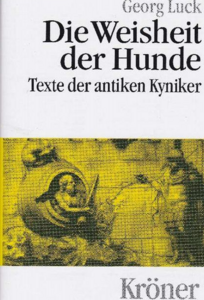
Book
The Cynics were the representatives of ancient punk philosophy – they lived on the streets, owned nothing, and held up a mirror to the Midases of their time. Diogenes, who lived in a barrel and asked Alexander the Great to please step out of the sun. Here you’ll find the original quotes. Sharp, witty, highly topical.
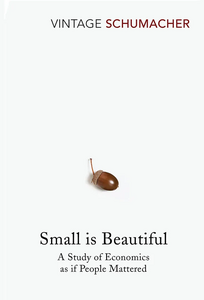
Book
Schumacher was chief economist and advisor to the British National Coal Board, the country’s largest energy company; he travelled to Burma in 1955 as an economic advisor, and there he began to ask: Is the richest society the one that produces the most – or the one that needs the least to live well? His proposal: Buddhist economics instead of the Midas Touch. Essential reading.