





Article

Article

HSG is one of the world’s leading universities in the field of research into innovation and entrepreneurship. This is demonstrated by a recently published research ranking. This article highlights five developments that are currently transforming innovation and entrepreneurship, as well as the research into them.

“Traditionally, innovation has been regarded as a genuinely human process, characterised by creativity, experience and intuition. In future, AI agents will independently and systematically develop promising innovations further.”
Arguably the most fundamental change is brought about by so-called AI agents. Whilst previous AI systems have primarily supported humans in their tasks, agent-based systems are increasingly able to pursue goals, prepare decisions, carry out experiments and coordinate tasks independently.
This is also changing our understanding of innovation. Traditionally, innovation was regarded as a genuinely human process, characterised by creativity, experience and intuition. In future, AI agents will independently develop new approaches, simulate thousands of variants and systematically refine promising innovations.
This raises a fundamental question for research: how does innovation change when it is no longer exclusively humans, but increasingly intelligent machines, that act as agents of innovation?
Practical relevance: Companies must learn not only to use AI tools, but also to reorganise entire innovation processes. This gives rise to new forms of collaboration between humans and autonomous AI systems.
Technological superiority alone has long ceased to guarantee economic success. What is increasingly decisive is how companies create value with new technologies and capitalise on it economically.
Business model innovation is therefore emerging as a key area of research. Of particular interest at present is how artificial intelligence is transforming traditional business models. When, for example, AI agents provide services autonomously, this opens up entirely new possibilities for service delivery and pricing.
At the same time, the boundaries between products, services and digital platforms are becoming increasingly blurred. Companies are increasingly moving away from simply selling products towards selling availability, performance or specific outcomes.
Practical relevance: For established companies, the ability to continually question their own business model is becoming a crucial competence. Swiss industry, in particular, has great opportunities here to combine its technological strengths with new business models.
AI significantly lowers the barriers to entry for start-ups. Tasks that used to require entire teams can now, in some cases, be carried out by individual entrepreneurs with the support of intelligent systems.
This applies to software development as well as market research, product design, marketing and administrative processes.
This is giving rise to a new generation of start-ups that can operate with significantly less capital and staff whilst still targeting international markets.
This raises exciting questions for entrepreneurship research: What resources will successful founders actually need in future? How are entrepreneurial skills changing? And which competitive advantages will remain as technological capabilities become increasingly accessible?
Practical relevance: Access to capital and staff could become less important for certain business models, whilst speed, customer access, proprietary data and entrepreneurial judgement will become more important.
Innovation is increasingly rarely generated within the confines of a single company. New solutions emerge through collaboration between companies, start-ups, universities, technology providers and customers.
Research is therefore focusing intensively on innovation ecosystems and platforms. This is not merely about exchanging knowledge, but about jointly building new value creation systems.
A particularly fascinating question is how such ecosystems are organised: who takes the lead? How are common standards established? And how is economic success distributed amongst the participating stakeholders?
Practical relevance: Companies must learn to cooperate and compete at the same time. The ability to integrate external partners and orchestrate joint innovations is becoming a core strategic competence.
Innovation research is also increasingly focusing on the question of how companies can innovate successfully in the face of high uncertainty. Geopolitical tensions, technological upheavals, regulatory changes and sustainability requirements are calling established innovation strategies into question.
Entrepreneurial activity therefore no longer means merely identifying new market opportunities. It is increasingly about experimenting in the face of uncertainty, deploying resources flexibly and developing new solutions to societal challenges.
Family businesses also play an important role here. Their long-term focus, ownership structures and ability to think across generations offer interesting perspectives for research.
Practical relevance: Companies need innovation strategies that combine a long-term focus with short-term adaptability. Successful innovation arises not only from technological excellence, but also from entrepreneurial resilience.
These five developments have one thing in common: they are changing the fundamental conditions under which business operates.
AI, in particular, could trigger a paradigm shift. We may be at the dawn of a new era in which innovation no longer arises solely from human creativity and collaboration, but increasingly from the interplay between human and artificial intelligence. Innovation is becoming more democratic, faster and more autonomous – but organising it successfully is becoming more challenging.
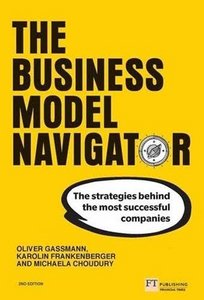
Book
New business models can be traced back to a combination of 55 well-known patterns. The St. Gallen Business Model Navigator brings these patterns together and categorises them according to four dimensions: Who? (the customers), What? (the value proposition), How? (the value chain) and Why? (the revenue model). This allows you to develop your own business model in a fun and engaging way.

Podcast
A podcast featuring fascinating guests discussing AI, developers and researchers. It raises the critical questions that enable a deeper understanding of this key technology in terms of technology, business and society.