








Re-interpreting Freedom

Freiheit gilt als eine der zentralen Errungenschaften der Moderne – und zugleich als eine ihrer grössten Herausforderungen. Die aktuelle Sonderausgabe von HSG FOCUS widmet sich deshalb einem Thema von grosser gesellschaftlicher Relevanz: der Frage, wie Freiheit im 21. Jahrhundert neu interpretiert werden kann. Grundlage der Ausgabe ist die Arbeit des ersten Jahrgangs des St.Gallen Collegiums, das Forschende und Denkerinnen aus unterschiedlichen Disziplinen zusammenbrachte.
Ausgangspunkt ist die Beobachtung, dass Freiheit weltweit unter Druck geraten ist. Politische Polarisierung, geopolitische Konflikte, wirtschaftliche Unsicherheit und technologische Umbrüche stellen liberale Demokratien vor grundlegende Herausforderungen. Vor diesem Hintergrund untersuchten die Fellows des Collegiums, wie individuelle Autonomie, politische Teilhabe und gesellschaftliche Verantwortung unter veränderten Bedingungen erhalten und weiterentwickelt werden können.
Im Zentrum der Ausgabe steht die Überzeugung, dass Freiheit nicht durch einfache Antworten oder ideologische Gewissheiten gesichert werden kann. Der Aufmacherbeitrag von Wolfram Eilenberger und Christoph Frei zeigt, wie produktiver Dialog zwischen unterschiedlichen wissenschaftlichen, kulturellen und politischen Perspektiven neue Denk- und Handlungsräume eröffnet. Mit der Zukunftsvision des Inselstaats «Toiva 2050» entwerfen die Autorinnen und Autoren ein Gedankenexperiment, in dem alternative Formen des Zusammenlebens und der Freiheit erprobt werden.
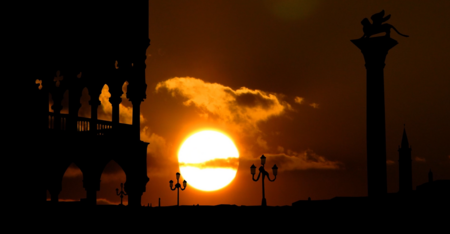
Mehrere Beiträge greifen historische Beispiele auf, um aktuelle Entwicklungen besser zu verstehen. Wolfram Eilenberger deutet Venedig als Quelle einer freiheitlichen europäischen Tradition, deren Potenzial bis heute nicht ausgeschöpft ist. Andreas Lingg zeigt wiederum am Niedergang der Republik Venedig, wie der Rückzug von Eliten aus öffentlicher Verantwortung Innovationskraft, politische Handlungsfähigkeit und gesellschaftliche Zukunftsperspektiven schwächen kann.
Andere Autorinnen und Autoren richten den Blick auf die wirtschaftlichen Voraussetzungen von Freiheit. Annette Kehnel liest den Mythos von König Midas als Warnung vor einer Kultur grenzenloser Gewinnorientierung und hinterfragt die Vorstellung, materieller Wohlstand führe automatisch zu mehr Freiheit. Tanja A. Gonzalez untersucht die Rolle der Kapitalmärkte und argumentiert, dass wirtschaftliche Freiheit nur dann wirksam wird, wenn echte Teilhabe an wirtschaftlichen Entscheidungsprozessen möglich ist.
Einen kritischen Blick auf die Gegenwart liberaler Demokratien wirft schliesslich Arpad Szakolczai. Er hinterfragt die Grundannahmen des Neoliberalismus und analysiert, wie Medienkonzentration, politische Macht und wirtschaftliche Interessen die Freiheit des öffentlichen Diskurses beeinflussen.
Die Beiträge der HSG FOCUS-Ausgabe machen deutlich: Freiheit ist weder ein statischer Zustand noch eine selbstverständliche Errungenschaft. Sie verlangt Verantwortung, Beteiligung und die Bereitschaft, gesellschaftliche Entwicklungen aktiv mitzugestalten. Gerade in einer Zeit tiefgreifender Umbrüche liefert das St.Gallen Collegium wichtige Impulse für die Zukunft von Demokratie, Wirtschaft und Gesellschaft.

YouTube Video

Palantir und die Schweiz – Zwischen Daten und Macht (2026, SRF)

Eine gut recherchierte Reportage von SRF über die Bemühungen von Palantir, die Schweizer Regierung mit KI-Tools auszustatten (Ich wurde für diese Dokumentation interviewt).

Buch

Thomas Mann: Death in Venice (1913)

Die Ur-Novelle – über die Lebensfreude und deren Fehlen am schönsten Strand der Welt.

Buch

E.F. Schumacher: Small is Beautiful. Economics as if People Mattered (1973)

Schumacher war Chefvolkswirt und Berater des Britischen National Coal Board, dem größten Energiekonzern des Landes, reiste 1955 als Wirtschaftsberater nach Burma, und kam dort ins Fragen: Ist die reichste Gesellschaft jene, die am meisten produziert – oder jene, die am wenigsten braucht, um gut zu leben? Sein Vorschlag: Buddhist Economics statt Midas Touch. Pflichtlektüre.

Buch

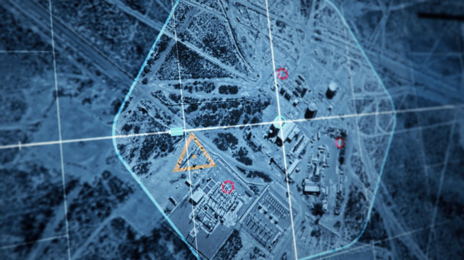
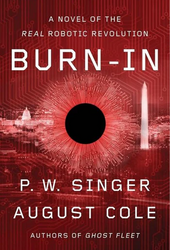
August Cole / P. W. Singer: Burn-In (2020)

Das Buch «Burn-In» von August Cole und P. W. Singer ist ein rasanter Thriller, der auf gründlich recherchierter Fiktion zu den Themen Sicherheit, Konflikt und KI basiert.

Buch

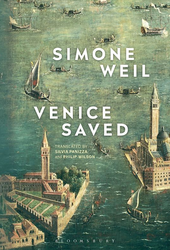
Simone Weil: Venice Saved (1940)

Das einzige Theaterstück der Philosophin Simone Weil. Über die rettende Kraft der Schönheit in dunklen Zeiten.

Film

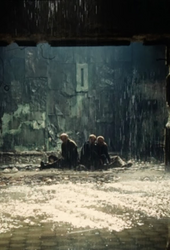
Andrei Tarkovsky: Stalker (1979)

Nach dem Roman «Piknik am Wegesrand» von Arkadi und Boris Strugatski. Die Zone, die aus unbekannten Gründen auf der Erde entstanden ist, zieht die Aufmerksamkeit durch unerklärliche Phänomene auf sich, die dort auftreten. Es hat sich das Gerücht verbreitet, dass es im Zentrum der Zone etwas gibt, das einem Menschen alles gewährt, was er sich wünscht. Doch ein Aufenthalt in der Zone ist tödlich, weshalb sie streng bewacht wird. Dorthin begeben sich der Schriftsteller und der Professor, jeder aus seinen eigenen Gründen; der Stalker führt sie zum geheimnisvollen Zentrum, da er die Zone spürt und versteht.

Buch

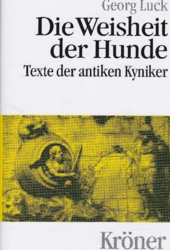
Georg Luck (Hg.): Die Weisheit der Hunde. Texte der antiken Kyniker in deutscher Übersetzung (1997

Die Kyniker waren die Vertreter der antiken Punk-Philosophie – sie lebten auf der Straße, besaßen nichts, und hielten dem Midas ihrer Zeit den Spiegel vor. Diogenes, der im Fass lebte und Alexander den Großen bat, ihm doch bitte aus der Sonne zu gehen. Hier findet man die O-Töne. Scharf, witzig, hochaktuell.

Buch

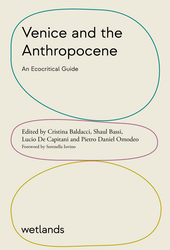
Cristina Baldacci et al.: Venice and the Anthropocene: An Ecocritical Guide (2022)

Voller interessanter Einblicke in die Lagunenstadt als vorbildliches Modell für ökologische und wirtschaftliche Nachhaltigkeit – und, ja, auch für Nicht-Nachhaltigkeit.

Buch

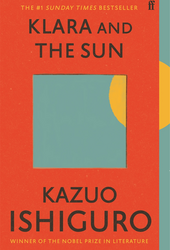
Kazuo Ishiguro: Klara and the Sun (2021)

Für eine Auseinandersetzung mit der Zukunft von KI, autonomer Robotik und der menschlichen Natur empfehle ich den Roman des Nobelpreisträgers Kazuo Ishiguro: Klara and the Sun.

Podcast

CII's Podcast: The Voice of Corporate Governance (seit 2026)

Eine leicht zugängliche Möglichkeit, Debatten über Corporate Governance zu verfolgen – durch Gespräche mit Experten, die fachliche Vorschriften mit ihren praktischen Auswirkungen in der Praxis verknüpfen.

Serie

Katja Meier: $HARE (2025)

Lena Corbyn erbt ein Bergbauimperium – und beschließt, es von innen heraus zu sprengen. Was passiert, wenn jemand den Midas Touch bewusst verweigert? Die Schweizer Serie spielt solch ein Szenarium durch. Spannend. Preisgekrönt, von Forbes und The Guardian empfohlen, executive produced von Rhea Seehorn (Better Call Saul). Unbedingt ansehen.

Buch

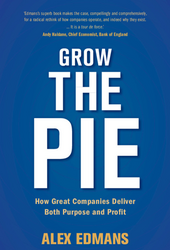
Alex Edmans: Grow the Pie (2020)

Eine aktuelle Auseinandersetzung mit der Unternehmensverantwortung. Fesselnd geschrieben und mit vielen Beispielen aus der Praxis.

Buch

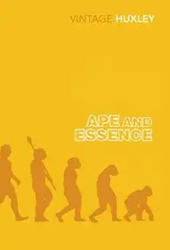
Aldous Huxley: Ape and Essence (1948)

Huxleys dystopischer Klassiker ist eine albtraumhafte Vision vom Schicksal der Menschheit in einer Welt nach einem Atomkrieg.

Buch

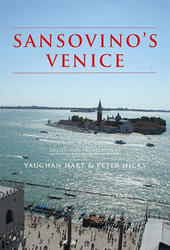
Vaughan Hart / Peter Hicks: Sansovino's Venice (2017)

Die Zahl an Publikationen über die Krise Venedigs im 16. Jahrhundert ist gigantisch. Deshalb an dieser Stelle weniger eine Literatur-, denn eine Reiseempfehlung. Die alte kommerzielle Pracht und Stärke Venedigs, die führende Rolle der Stadt insbesondere in den Bereichen des Fernhandels und Kunsthandwerks, ist noch heute hautnah erlebbar. Vom Fondaco dei Tedeschi, über die seinerzeit auch St. Galler Waren vertrieben wurde, über Murano, dessen Glasprodukte damals bis in die neue Welt transportiert wurden, bis zum Arsenale, eine der ersten protoindustriellen Anlagen Europas. Dazu als Begleitlektüre sei der Stadtführer von Francesco Sansovino empfohlen, erschienen 1581, in einer englischen Neuausgabe von Vaughan Hart und Peter Hicks erhältlich. Dieses Buch wurde auch mit der Absicht geschrieben, in Angesicht der immer grösseren Risse im politischen und kulturellen Gefüge der Republik ein Bild der Einheit zu beschwören. Wer den damit adressierten Bruchlinien folgen möchte, dem sei ein anschliessender Ausflug auf das Festland und der Besuch einer Villa, den damals neuerrichteten Landsitzen venezianischer Patrizier, sehr ans Herz gelegt. Beispielhaft sei hier die Villa Barbaro in Maser genannt, geplant und gebaut von dem berühmten Architekten Andrea Palladio. Sie steht exemplarisch für die Zerrissenheit der damaligen Oberschicht. Ihre Auftraggeber, die Brüder Marc‘ Antonio und Daniele Barbaro, beschäftigten sich ihr ganzes Leben in Briefen und Büchern mit dem Spannungszustand von Land und Lagune, privatem Idyll und öffentlichen Angelegenheiten, Ab- und Hinwendung.

Fokussiert bleiben

Ausgewählte Feed-Beiträge von Universitäten, Denkfabriken und Medien.
06.08.2026
05.08.2026
Kampf um Demokratie - Wenn Mächtige die Welt neu ordnen
Politik

Kampf um Demokratie - Wenn Mächtige die Welt neu ordnen

Freiheit und Demokratie sind weltweit unter Druck. In Europa ist Krieg, Nationalismus erstarkt und der Einfluss von Tech-Oligarchen wächst. Ist die Stärke des Rechts dem Recht des Stärkeren noch gewachsen? Wie steht es um die Freiheit? (Erstsendung 21.1.2026)Wentzien, Birgit

Deutschlandfunk

Saudi Arabia still views the US as its main strategic partner – despite Trump’s nuclear agreement conditions
Politik

Saudi Arabia still views the US as its main strategic partner – despite Trump’s nuclear agreement conditions

Saudi Arabia still views the US as its main strategic partner – despite Trump’s nuclear agreement conditions Expert comment jon.wallace 5 August 2026 Riyadh’s argument to Washington is that a close partnership should not be contingent on membership of the Abraham Accords, when it is playing a growing role in regional security. A series of seemingly disconnected developments over the past week point to a common objective in Saudi foreign policy. Riyadh is seeking to assume greater responsibility for regional security. But it also wants to reinforce its importance to the US, at a time when Washington’s long-term commitment to the Middle East is increasingly in doubt. The recent civilian nuclear agreement with the US underlines the depth of its commitment to that partnership. For much of the past decade, successive US administrations have sought to reduce their exposure to Middle Eastern conflicts while encouraging regional partners like Saudi Arabia to assume greater responsibility for their own security. Ironically, it is President Donald Trump’s war against Iran – involving the largest deployment of US forces since 1990 – that has prompted Riyadh to reassess its role in the regional order. Saudi Arabia increasingly views itself as a provider of security, stability and economic continuity. This is not simply a response to President Trump’s calls for burden-sharing. Saudi Arabia’s leadership has concluded that the regional environment demands it take a more active role. The challenge for Riyadh is no longer how to secure US protection. It is how to safeguard Saudi interests in a region where US engagement remains substantial, but is less predictable than in the past. Recent conflicts have also reinforced the risks posed by increasingly volatile regional dynamics, including the potential for actions by Israel or Iran to trigger wider instability that directly affects Saudi interests.The nuclear dealThat calculation helps to explain the civilian nuclear agreement signed by Saudi Arabia and the US on 22 July. The agreement represents the culmination of years of patient negotiation by Riyadh, as it persisted in seeking a deal with Washington – rather than Moscow or Beijing. The Kingdom has always believed that US technology, expertise and investment would provide the strongest foundation for its ambitions. The agreement deepens the relationship by establishing a framework for long-term cooperation on civilian nuclear technology, and positioning US companies to play a leading role in the Saudi nuclear programme. It also demonstrates that Saudi Arabia continues to regard the US as its principal strategic partner. Behind the scenes, Riyadh wants to make sure that the question of normalization with Israel does not come to overshadow the broader foundations of its partnership with Washington.  However, one day after it was signed, President Trump sought to link the agreement’s approval to Saudi Arabia joining the Abraham Accords – that is, normalizing its relations with Israel. But Saudi Arabia has consistently maintained that formal relations with Israel depend on meaningful progress towards Palestinian statehood. And that position has only hardened following the brutal war in Gaza and the anger it has generated across the Arab world. Riyadh has made clear that it will not abandon that position.The issue remains unresolved, at least in public. But behind the scenes, Riyadh wants to make sure that the question of normalization with Israel does not come to overshadow the broader foundations of its partnership with Washington. Saudi crown prince and de facto ruler Mohammed bin Salman (MBS) is, in effect, making the case that the kingdom’s contribution to regional stability, economic security and collective security efforts warrants progress in other areas of the bilateral relationship without the need for further conditions – particularly politically impossible ones like joining the Abraham Accords.Regional securitySaudi Arabia’s more active role in regional security is already evident in the Red Sea – which has become one of the world’s most important and vulnerable waterways. The crisis in the Strait of Hormuz has increased the Red Sea’s importance as an alternative route for energy exports and international trade. But in recent days the Iran-backed Houthi militia in Yemen has sought to drag these waters into the wider regional conflict.On 20 July, the Houthis announced a blockade of Saudi-linked shipping passing through the Bab al-Mandab Strait. Within days, the group claimed attacks against Saudi oil tankers in the Red Sea. On 25 July, it launched missile and drone strikes against Aramco facilities in Jizan and Yanbu, Saudi Arabia’s principal Red Sea oil export hub. These moves have exposed a significant vulnerability for the kingdom and the wider global economy, increasing costs for commercial shipping and raising concerns about the resilience of international supply chains and energy markets. Related work How the Iran war is reshaping Saudi strategy: From Hormuz and Houthis to the UAE’s OPEC exit The Saudi government has stepped up. On 30 July, its Ministry of Defence convened military chiefs and representatives from 43 countries and the European Union in Riyadh to discuss the establishment of a new maritime security coalition to defend freedom of navigation in the Red Sea. The kingdom proposed to host the coalition’s headquarters and secured the support of 14 participating states. This is perhaps the clearest indication yet that the kingdom is prepared to coordinate collective responses to challenges that affect both its own interests and those of the wider international community. While the initiative was prompted by recent Houthi actions, it also reflects a broader Saudi recognition: the security of the Red Sea is vital to the kingdom’s economic ambitions and long-term security interests.The joint Saudi-US airstrikes of 28 July point to the same move towards a more assertive security role. Precision strikes were carried out against Iran-aligned groups in eastern Iraq, after they directed more than 30 drone attacks at Saudi energy infrastructure and US forces over a period of 72 hours. The operation was notable not only because it was conducted jointly with Washington. It was also striking because Saudi Arabia has generally sought to avoid direct military action inside Iraq. Indeed, Riyadh has spent the past several years reducing tensions with Tehran and has little interest in a broader confrontation with Iran. By acting alongside the US, Riyadh signalled that its pursuit of regional de-escalation does not preclude a willingness to respond when its security interests are directly challenged.There is also, notably, a competitive dimension to Saudi Arabia’s recent activism. Riyadh is aware of the Trump administration’s close relationship with the UAE, which has already normalized relations with Israel via the Abraham Accords, aligning closely with a key US policy objective.By taking a leading role on issues that directly affect US interests, including regional security, maritime security and energy flows, Riyadh is demonstrating that its value to Washington rests on a far broader foundation than trade and investment alone.Recent developments suggest that Saudi Arabia is seeking to redefine its role within the regional order. The kingdom will not abandon its position on Palestinian statehood. Nor will it distance itself from Washington. Instead, it is demonstrating that has crucial value to the US beyond the question of normalization with Israel. Through security cooperation, burden-sharing and a greater willingness to address regional challenges, Riyadh is making the case for a partnership defined by shared interests rather than a single political objective. 

Chatham House

Absorbing Shocks Since 1891
Wirtschaft

Absorbing Shocks Since 1891

Recorded at the PSE-CEPR Policy Forum 2026. A country wants a stable exchange rate, it wants money to move freely across its borders, and it wants to set its own interest rates. It's a well-known trilemma. Central bankers must pick any two, because you cannot have all three. History, it turns out, did not read that memo. Eric Monnet has spent years reading the balance sheets that central bankers kept on each other. From 1891 onwards, the Bank of France paid teams of multilingual economists to copy out the weekly and monthly accounts of every other central bank in the world. Those ledgers, now digitised, show that central banks have been far more than interest-rate setters: for more than a century they have quietly expanded their balance sheets to cushion their economies against shocks arriving from abroad. In this week's VoxTalk, Monnet argues we have seriously underestimated how much room to manoeuvre they have used since the 19th century.

Center for Economic Policy Research

When political pressure trumps academic freedom
Wirtschaft

When political pressure trumps academic freedom

Academic freedom has been declining over the past decade across the world. This column analyses over 25,000 economics working papers to show that, beyond direct intervention by authorities, political pressure also breeds self-censorship. After US federal agencies began screening research for a list of flagged words in early 2025, economists at universities most dependent on federal funding reduced politically sensitive content – even in research without any direct federal funding.

Center for Economic Policy Research

03.08.2026
By agreeing to disarm, Hamas is trying to call Israel’s bluff in Gaza
Politik

By agreeing to disarm, Hamas is trying to call Israel’s bluff in Gaza

By agreeing to disarm, Hamas is trying to call Israel’s bluff in Gaza Expert comment thilton.drupal 3 August 2026 The move may lead to more pressure on Israel to implement Trump’s 20-point plan, but both sides are likely to keep dragging out the process while avoiding any real commitments. Since the Gaza ceasefire came into effect in October 2025, the Board of Peace has focused predominantly on Hamas’s disarmament as the key to unlocking other elements of US President Donald Trump’s 20-point plan. These include the entry into Gaza of the technocratic National Committee for the Administration of Gaza (NCAG), the deployment of an International Stabilization Force (ISF), and the start of desperately needed reconstruction.Most crucially, the emphasis on disarmament has precluded any discussion of Israel’s withdrawal from Gaza. Instead, Israeli control of the territory has increased significantly since the start of the ceasefire, from about 53 per cent of Gaza in October (delineated by the so-called ‘Yellow Line’) to nearly 70 per cent today.President Trump’s recent announcement that Hamas has agreed to his disarmament plan may change that dynamic. By essentially calling Israel’s bluff, Hamas’s move could potentially put external pressure on Israel in Gaza for the first time in months. The question is whether the Board of Peace in general, and Trump in particular, are willing to put the necessary pressure on both parties to move past the current stalemate.Swift change unlikelyIn reality, it is unlikely that a timeline for decommissioning weapons or drawing down troops will be agreed anytime soon.Israeli Prime Minister Benjamin Netanyahu will likely seek to drag out any further negotiations as much as possible; the last thing he wants as he goes into October’s elections is US pressure to withdraw from Gaza. Any public suggestion from Netanyahu that Israel would reduce its control in Gaza or make concessions to Hamas would likely lose him his voter base. (Far from accepting Israel’s withdrawal from the enclave, right-wing Israeli ministers have already announced plans for new settlements in Gaza.)Dragging out the process also suits Hamas. Agreeing to Trump’s plan is likely a pragmatic move by new Hamas leader Khalil al-Hayya. It keeps the group in the conversation about Gaza’s future and may improve its position in relation to the Board of Peace – potentially even shifting the onus of intransigence to Israel. But Hamas knows that the actual decommissioning of its weapons will not be immediate. It is unlikely that a timeline for decommissioning weapons or drawing down troops will be agreed anytime soon. Indeed, both actors will likely double down on sequencing demands that have stymied previous attempts to reach agreements in Gaza: Israel will likely require full Hamas disarmament before withdrawal, while Hamas will likely insist on Israeli withdrawal before decommissioning weapons.Already, Israeli officials have said they will not pull back without ‘genuine disarmament’ by Hamas and have expressed ‘serious security concerns’ about the deal to the White House.Israel reportedly insisted to the Board of Peace that it reserved the right to strike areas set to be handed over to the ISF and objected to Qatar and Turkey (both central mediators in the agreement with Hamas) being involved in the roadmap’s future verification stages. It also reportedly demanded that Hamas’s weapons be destroyed rather than stored after confiscation.Hamas is also hedging. It has stated that its moves will be contingent on Israel ending ‘all forms of aggression’, as well as withdrawing to the October ceasefire’s ‘Yellow Line,’ facilitating the entry of the ISF and NCAG, and meeting humanitarian aid obligations.Hamas has also rejected Israeli demands that weapons be destroyed, and has intentionally avoided the language of disarmament or surrender. Indeed, the term ‘disarmament’ does not appear anywhere in Trump’s roadmap, relying instead on ‘decommissioning,’ modelled in part on Northern Ireland’s process. — Two perspectives on the two-state solution from the Chatham House archive: the UK’s former Foreign Secretary Yvette Cooper on 9 July 2026; and Israeli Prime Minister Benjamin Netanyahu on 3 November 2017. Furthermore, Hamas will likely resist full decommissioning without a broader negotiated process to realize a Palestinian state. The disarmament plan does not mention Palestinian self-determination directly, but it does refer (in Article 8) to the completion of the ‘remaining commitments under [the] Sharm [el] Sheikh Protocol,’ Trump’s initial 20-point plan for Gaza. Point 19 of that plan refers to a ‘credible pathway for Palestinian self-determination and statehood.’ Netanyahu has fully rejected the notion of Palestinian statehood, while Hamas will insist upon it.US and Board of Peace officials have stressed the ‘zero trust’ nature of the roadmap, emphasizing that it will proceed based solely on externally verified steps and conditions. But even reciprocal processes require one side to take the first step. It is more likely that both sides will buy time by telling the Board of Peace at least some semblance of what it wants to hear. Meanwhile, they will both likely avoid any real commitments by objecting to any one of the myriad thorny details required to actually implement a plan.External pressureIn this context, external commitment and pressure are crucial. For Hamas, the mediating efforts of Egypt, Turkey, and Qatar have been essential in getting the group to publicly accept the agreement. But these regional states will have less leverage in getting Hamas to implement it, as they are not physically on the ground in Gaza to enforce commitments or to provide security guarantees.On the Israeli side, it remains unclear the extent to which the US – and by extension, the Board of Peace – will be willing to impose substantive pressure on Israel to even discuss withdrawal.There are several factors to consider here. First is the question of Trump’s personal commitment to shepherding the agreement beyond the fanfare of the initial headlines. If the past year is any guide, the disarmament roadmap could easily become yet another casualty of Trump’s slapdash approach to diplomacy, in which a numbered plan is released with bravado, but then flounders without the long, arduous subsequent work required to make it operational. 

Chatham House

02.08.2026
01.08.2026