














YouTube Video
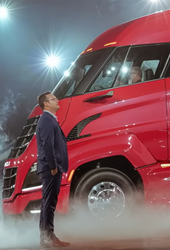
Nach der Begnadigung erzählt Milton seine Geschichte noch einmal selbst. Kein neutraler Film, und genau darum aufschlussreich: Der Fall läuft als Erzählung weiter, und dieser Beitrag liefert das Raster, mit dem sich prüfen lässt, was der Film behauptet und was er belegt.
Artikel
Die Quelle für die Trias aus Kompetenz, Integrität und Wohlwollen. Ein Aufsatz von 1995, der bis heute erklärt, warum Vertrauen kein Gefühl ist, sondern eine Erwartung an drei prüfbare Eigenschaften.
Buch
Der Standardtext zur Frage, wie Erzählung und Bewertung zusammenhängen. Damodaran zeigt, wie man eine Unternehmensgeschichte in Zahlen übersetzt und, wichtiger noch, wo diese Übersetzung scheitert.
Webseite
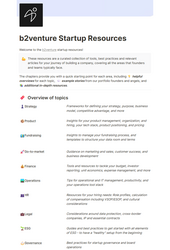
Eine Sammlung von Artikeln, Tools und Best Practices rund um die Gründung und Entwicklung eines Startups. Die Sammlung ist kuratiert und geprüft von erfahrenen Investor:innen und Gründer:innen.
Webseite
Der Report, der die Krise auslöste. Lesenswert als Lehrstück darüber, wie ein Gegenargument gebaut wird: Behauptung für Behauptung, jeweils mit Belegmaterial.
Buch
Ein modernes Standardwerk rund um das Thema Verhandlung.
Buch
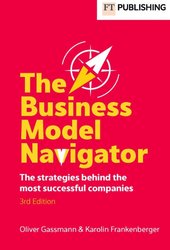
Neue Geschäftsmodelle lassen sich auf eine Kombination von 66 bekannten Mustern zurückführen. Der Business Model Navigator vereint diese Muster, kategorisiert sie anhand der vier Dimensionen: Wer? (die Kunden), Was? (das Nutzenversprechen), Wie? (die Wertschöpfungskette) sowie Wert? (Ertragsmechanik). So entwicklen Sie spielerisch Ihr eigenes Geschäftsmodell.
Buch
Die Langfassung dieses Artikels. Das Buch rekonstruiert den Fall Nikola systematisch und entwickelt einen Analyserahmen für das Zusammenspiel von Argumentation und Erzählung. Kapitel 8.5 listet sechs Warnsignale für Investoren.
Buch
Das Buch bündelt Wissen, Werkzeuge und praktische Hinweise für die verschiedenen Phasen einer Gründung – von der ersten Idee bis zum Aufbau eines Unternehmens. Ein kompakter Wegweiser für alle, die Entrepreneurship systematisch angehen wollen.
Webseite
Botnanza-Betreiber Lukas Ziegler ist Angel Investor in Robotics-Startups. Er berät zudem Startups, Investoren und Unternehmen zu den Themen Robotics und AI. Ziegler postet regelmässig Beiträge zu weltweiten Entwicklungen in Robotics und bietet einen Newsletter an.
Podcast
Podcast mit spannenden Gästen zu AI, Buildern und Forschern. Es werden die kritischen Fragen gestellt, welche ein tieferes Verständnis dieser Schlüsseltechnologie hinsichtlich Technologie, Business und Gesellschaft ermöglicht.
Podcast
Aus den Erfahrungen anderer Unternehmer:innen nehme ich viel für den eigenen Firmenaufbau mit; besonders inspirierend finde ich die Folge mit BORA-Gründer Willi Bruckbauer.
Buch
Das Buch vermittelt Schlafforschung verständlich und alltagsnah und zeigt, wie individuell unsere Schlafbedürfnisse sind.

Das Momentum ist auf der Seite der Demokraten. Jetzt geht es um die Frage, ob sie es in einen Wahlsieg verwandeln können. In Michigan kam es im demokratischen Lager zuletzt noch zu einem Eklat.
Tagesanzeiger
Stablecoins compete with banks for households’ holdings of safe and liquid assets, while creating additional demand for government debt. Building on a novel quantitative macroeconomic model, this column discusses how widespread stablecoin adoption affects the macroeconomy. In the baseline scenario, large-scale adoption has small negative long-run output effects. However, the sign and size of the effect depend on fiscal parameters, the regulatory framework for stablecoin reserve holdings, and whether stablecoin demand and issuance originate domestically or abroad. Short-run output effects can be significantly positive as the fiscal space channel activates faster.
Center for Economic Policy Research
Brussels or Beijing? The EU’s ‘Made in Europe’ plans will force the UK to choose Expert comment jon.wallace 29 October 2026 Either way, the UK will be forced to pay a price. The EU’s Industrial Accelerator Act (IAA) is pushing the UK toward an economic confrontation with China it would rather avoid. The IAA plans to introduce new ‘Made in Europe’ obligations, conditioning access to certain public subsidy and procurement schemes on the use of sufficient local, European, content. This is intended, in part, to protect European industry from cheap, high-quality, Chinese goods such as hybrid and electric vehicles (EVs). The UK government, seeking closer economic integration with the EU, wants ‘Made in Europe’ provisions extended to include its firms. But key EU member states are conditioning any extension on the UK aligning with EU economic security measures. A 15 October Franco-German paper said that ‘Made in Europe’ treatment for the automotive sector should only be extended to the UK and a small group of other partners on the condition of both reciprocity and ‘dynamic alignment with EU conditions related to third countries’ investments and on relevant EU trade defense measures’. In practical terms, France and Germany want the UK to impose tariffs on Chinese EVs to prevent the further erosion of their manufacturers’ UK market share. They also want the UK to impose stricter conditions on foreign direct investment into key manufacturing sectors to prevent Chinese firms from qualifying for future EU subsidies or procurement schemes via their UK-located operations. With the next EU–UK summit scheduled for 20 November, this creates a problem for Prime Minister Andy Burnham’s new government. Much of the media reporting has focused on the question of whether the UK will agree to impose tariffs on Chinese vehicles. But the focus on investment is arguably more consequential, given the UK’s desire to attract Chinese automotive manufacturing facilities to Britain. The UK’s China problemUntil now, the UK’s preferred approach to China has been one of cautious pragmatism. It has demonstrated a willingness to intervene with tariffs or other restrictions in the event of acute economic or national security concerns. See, for example, the decision to impose permanently high tariffs on certain steel products or the blocking of a proposed £1.5 billion investment in offshore wind by the Chinese firm Ming Yang. Want to hear more on the future of global trade? Join us at our Global Trade Conference for expert analysis on the shifting rules of the global economy. However, the UK has continued to court Chinese investment in the automotive sector and deepen trade ties in what it considers non-sensitive areas. And, though it has made a commitment to the US to strengthen supply chain security in respect of steel and pharmaceuticals as part of the 2025 Economic Prosperity Deal, there has so far been limited evidence of substantive implementation. The UK’s reluctance to fully align with either the EU or US approach to China is understandable, given its relative size and economic weight. It wants increased trade and investment and relies on Chinese renewables for its decarbonization objectives. But the UK can certainly not afford to be shut out of EU procurement and public subsidy schemes. The EU’s proposed safeguard on hybrid vehicle imports – which would restrict imports above specified quota levels – will also create its own pressures, as Chinese vehicles risk being diverted onto the UK market. It is therefore less of a question of whether the UK will align itself with EU economic security measures than how.The price to payOne route would be for the UK to replicate EU measures wholesale. This would see the UK replicate EU tariffs on EVs and the new hybrid safeguard. And it could potentially include future interventions targeting chemicals, plastics, batteries and wind turbines. The UK would also need to consider equivalent restrictions on foreign investment, reflecting proposed IAA conditions relating to ownership limits, joint ventures, workforce localization and local content in key manufacturing sectors. Yet this approach is not straightforward. The UK does not necessarily have the legal tools available to replicate EU measures and has historically been cautious about breaching its international obligations. China would also be incentivized to retaliate. That could mean anything from initiating its own tariff measures against UK exports to imposing restrictions on rare earths or battery inputs. Beijing may have a greater incentive to make an example of the UK than escalate its confrontation with the EU. The UK is not the only country in the region facing pressure from the EU to impose more stringent controls on Chinese trade and investment as a condition for access to the EU market. Turkey, Morocco and Switzerland are in a similar position. China will be wary of a negative precedent being established and keen to demonstrate that aligning with EU restrictions comes at a price. Indeed, Beijing may have a greater incentive to make an example of the UK than escalate its confrontation with the EU.An alternative would be for the UK to pursue similar outcomes more slowly, using traditional trade defence tools. An anti-subsidy investigation into Chinese electric vehicles, for example, would take around a year to conclude but could provide the government with some breathing space. A safeguard investigation, potentially justified by rising Chinese imports and the risk of trade diversion from the EU, could offer a quicker route. Neither would guarantee the outcome the EU wants. And both would need to satisfy the relevant legal requirements. But they would at least allow the UK to argue that it was responding to evidence of harm to its own industry, rather than simply implementing EU demands. A safeguard also has the benefit, or not, of generally applying to imports regardless of origin, allowing the UK to argue it is not singling out China. It also remains possible that Brussels will attach more importance to the political signal of alignment than to the precise form of the measures adopted.Yet this still leaves open the question of Chinese investment into UK manufacturing. This is of particular importance in the automotive sector. And it will prove more difficult to address without compromising the government’s wider economic objectives. — Watch: David Lubin on what the 2026 Bund Summit in Shanghai tells us about China’s economic engagement with the rest of the world. The government could also seek to demonstrate progress by announcing new economic security tools, such as a proposed anti-coercion instrument. It could also introduce specific restrictions on foreign investment, or repackage existing initiatives, such as new cybersecurity-related restrictions. Such announcements might demonstrate goodwill towards Brussels but they would not automatically satisfy EU demands for alignment on specific measures. The most likely outcome is that the UK seeks to navigate a course through these competing demands, giving the EU just enough of what it wants, while delaying implementation, hoping to avoid the worst response from Beijing. Delay may buy time with Brussels. But Beijing will likely view any such commitment as setting a precedent and retaliate against the UK accordingly. There will be a price for the UK to pay either way. The only question is how successfully the government can minimize it.
Chatham House
The Social.Wiki framework enables anyone to easily edit social websites within the system, while allowing them to choose the content they see.
MIT
Europe’s push for deeper capital markets assumes that cross-border equity ownership matters. This column shows that it does. Euro area listed firms remain heavily owned by domestic investors. When COVID-19 struck, firms in the hardest-hit sectors with more domestically concentrated shareholders cut investment more, lost more value, and raised less equity than peers with diversified shareholder bases. Capital markets union is hence not just about financial integration. It is about real economic resilience.
Center for Economic Policy Research
Zusammenfassung: Selbstverständlich europäisch 2026 5 Minuten
Heinrich Böll Stiftung
Panelists at the Center for European Studies weigh what AfD’s rise means for German politics
Harvard University